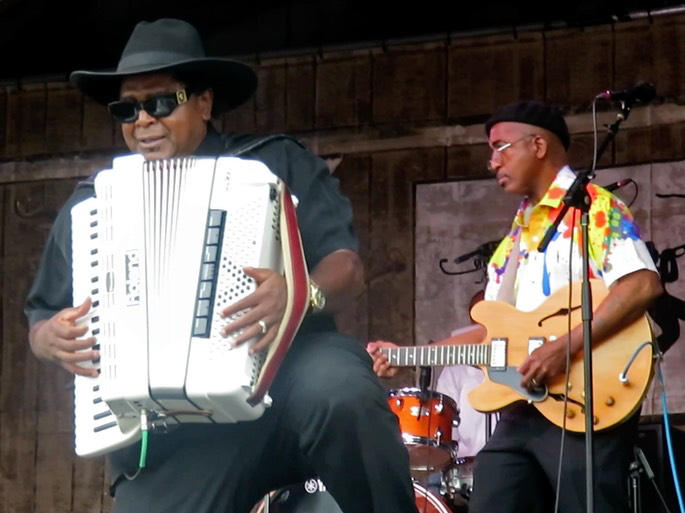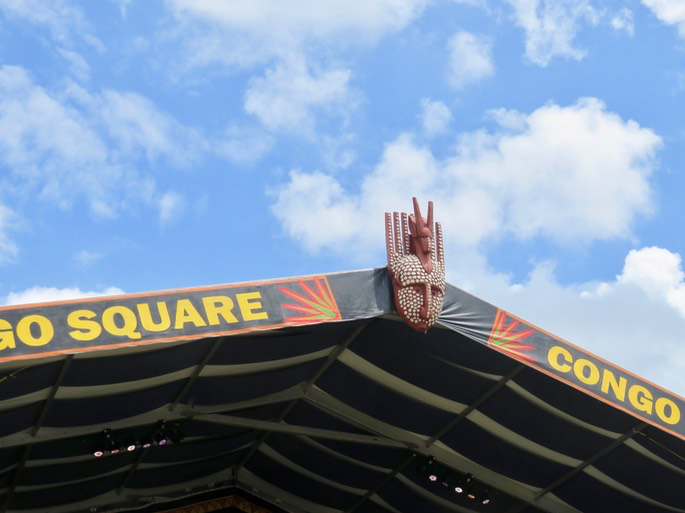
Once again we got our act together pretty easily this morning, considering the late dinner last night followed by the usual posting of the trip report and videos. Our room at the Staybridge this year fortunately has good wi-fi, unlike last year when we had to go down to the public area for a decent connection. We met Rachel, and we were off and at the Fair Grounds before 11 once again.

The temperature was 79 when we left the hotel this morning, but once again that was pretty much it, as the high was 82 this afternoon. This evening it was a nice 75. There were a lot of clouds around this morning, but they were mostly gone by 3 p.m., which made it seem a lot warmer as the afternoon turned into evening. Humidity again hovered around 70 percent all day. The breeze was not noticeable until the clouds departed, and then it was in the 12-15 mph range.
Here are the cubes with today's musical possibilities.
Food!
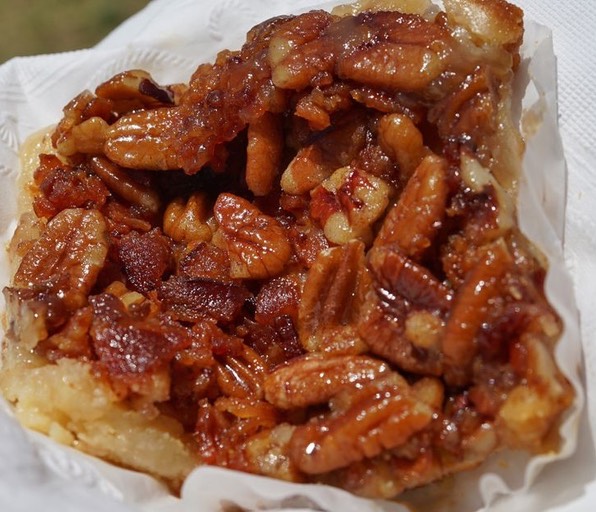

Our brunch was on the sweet side this morning. Laurie had Cecilia Husing's strawberry shortcake (see Day 10 in 2014 and Day 11 in 2016). As you must know by now, strawberries are in season down here, and the Pontchatoula strawberries are sweet and delicious. The cake is perfect, as is the real-deal whipped cream. As for me, it was a bacon and pecan square from Marie's Sugar Dumplings (see Day 11 last year). This thing is beyond outrageous -- it's gooey, and it's really sweet, and it's topped with confectioner's sugar that gets all over you, but for crying out loud it's like pecan pie with bacon!
After we devoured our brunch sweets, Laurie headed off to the Acura stage, and I headed to the Blues Tent. But on my way I stopped for a while at the Jazz and Heritage stage.
Iguanas
Laurie, at the Acura stage
Seen Before: Day 2 in 2012, Day 8 in 2015, and Day 12 last year. Also at the Rock 'n' Bowl on Day 3 in 2013 and at The Hamilton in DC last September.
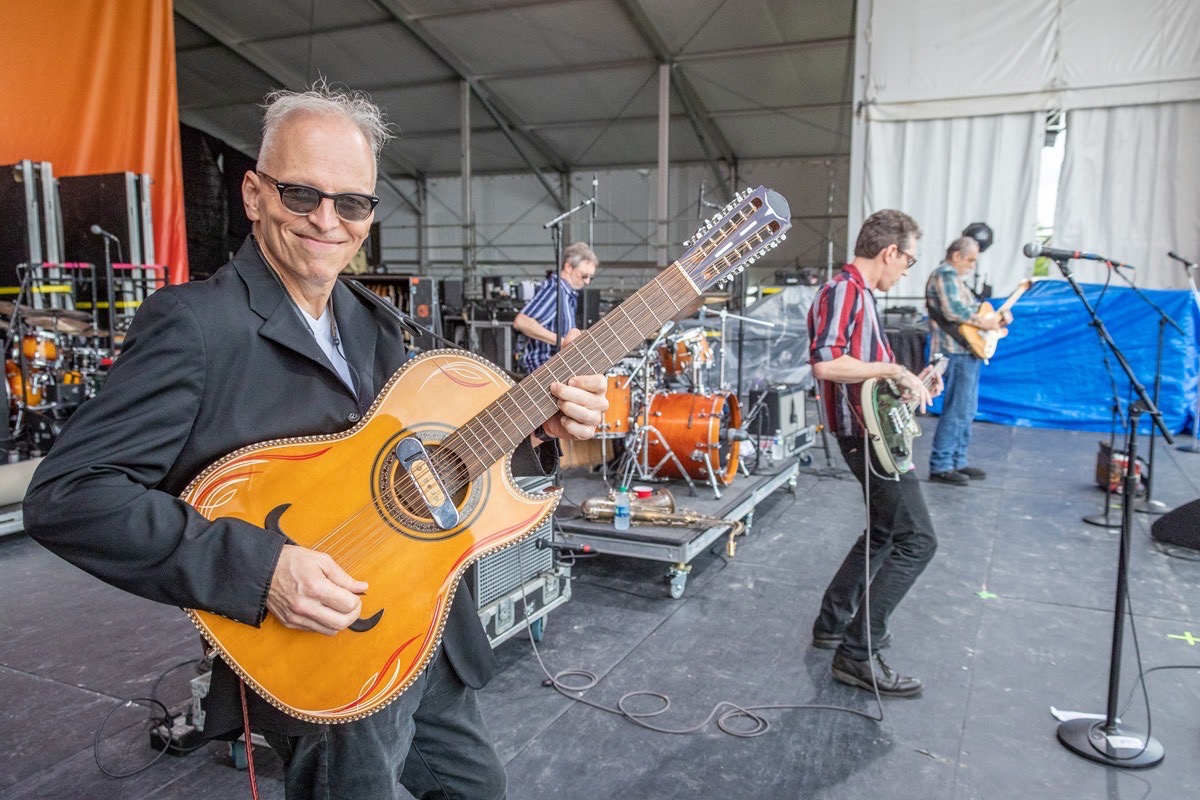
The Iguanas lay down fantastic grooves, a hybrid of blues, classic R&B, zydeco, Cajun, Tex-Mex, and roots rock.
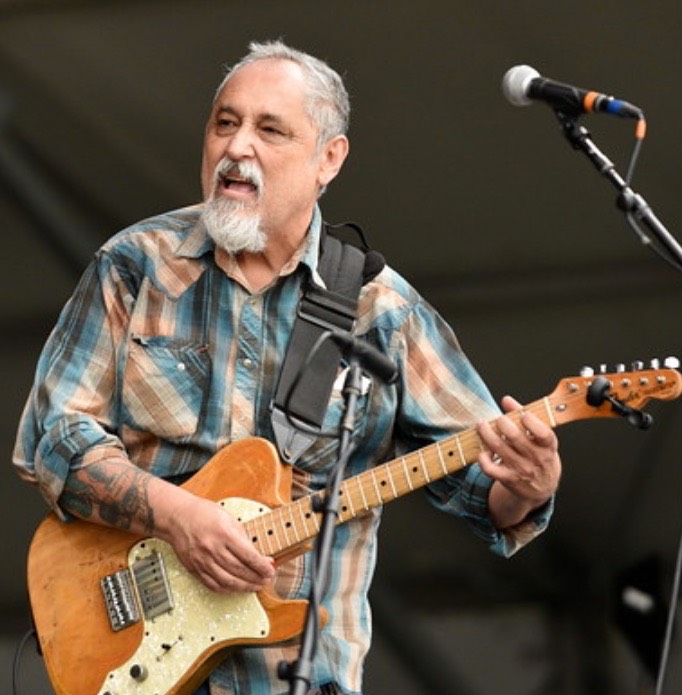
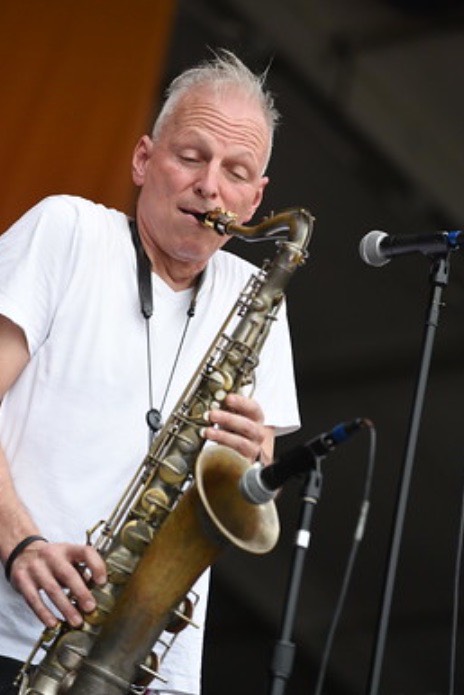
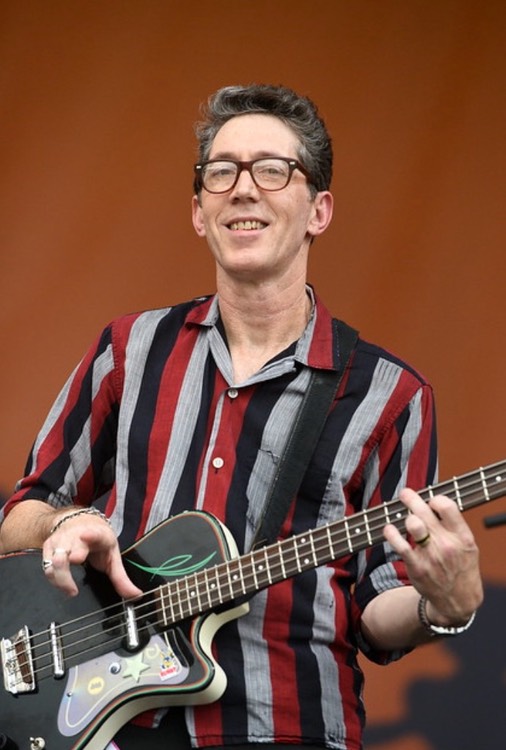
Vocalist and guitarist Rod Hodges is primarily responsible for this sound, as he rediscovered the conjunto music that was a part of his mother's Mexican heritage. Vocalist and saxophonist Joe Cabral was part of his father's Mexican band when he discovered Chicago blues, New Orleans R&B, and the honking saxophone style. Bassist Rene Coman is a native of New Orleans, so you know what his roots represent. Drummer Doug Garrison rounds out this great band.
Audio/Video: Nothing from the Acura stage today except the Munck Music excerpts of the songs in their set. Here is a half hour from the Louisiana Music Factory.
Comanche Hunters Mardi Gras Indians
Jeff, at the Jazz and Heritage stage
Seen Before: Day 3 in 2017
Led by Big Chief Keith "Ke-Ke" Gibson, this group is from the Ninth Ward of New Orleans, and has some incredibly elaborate suits.
Audio/Video: Check out the Comanche Hunters in my video from the Jazz and Heritage stage today.

Ernie Vincent and the Top Notes
Jeff, in the Blues Tent
Seen Before: Day 2 in 2015
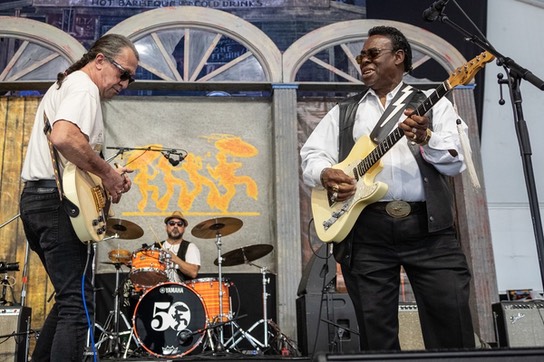

Ernie Vincent is a funk and blues living legend. A product of the golden era of New Orleans R&B, he's been on the music scene since the mid 1960s, collaborating with the likes of Ernie K-Doe, King Floyd, Tommy Ridgley, Oliver Morgan, Irving Bannister, Eddie Bo, Jessie Hill, and more. In the early 1970s he created his own band and signature sound with the Top Notes, churning out smash hits like and "Things Are Better" and "Dap Walk," for which he's gone down in the deep funk history books. "Dap Walk" is an unhinged masterpiece of wah wah guitar, multiple drum breakdowns, and positive ghetto messages, and to this day it is a cult classic.


His appearance is intense and his leads are sharp. He has played in bands with such artists as Joe Tex, Solomon Burke, Alex Spearman, and many of the Mardi Gras Indian bands such as the Wild Magnolias and Big Chief Monk Boudreaux and the Golden Eagles. Vincent formed the new Top Notes band in June 2009 with some of the most talented and accomplished musicians in New Orleans including Eric Heigle on drums, Phil Breen on keyboards, Josh Reppel on bass, James Martin on Sax, Mike Kobrin on trumpet, and Ian Smith on Trombone.
Audio/Video: Here's my video of Ernie Vincent and the Top Notes from the Blues Tent this morning, and here is another from today. For something longer, here's 25 minutes from the Louisiana Music Factory in 2017.
My ultimate goal for the next music was the Fais Do Do stage, but of course there were a couple of distractions on the way.
Joel Jones and 3MC
Jeff, in the Gospel Tent
Seen Before: First Time!

Joel Jones and 3MC are from the Greater Mt. Calvary Church in New Orleans, founded in 2009. They are passionately committed to inspiring and enlightening audiences with some of the most commanding voices in music. The choir has experience ministering at numerous venues and events in Louisiana and beyond, and is known for its renditions of the classics from the eras when choir music was prevalent. Members are from the entire southeastern region of Louisiana.
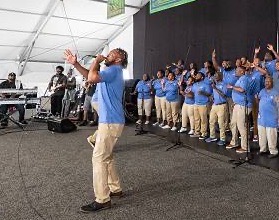
Joel Jones was born in 1977. He began playing music at the age of five. Under the leadership of his father, the late Rev. Dr. Levi Jones, he started in music for his father's church at the age of eight. As he matured spiritually, he began to understand the difference between just playing music and ministry through music. He says God opened his eyes to see the importance of, and also the lack of, genuine music ministry in the church. Joel currently serves as the Minister of Music at Greater Mt. Calvary Church under the leadership of Elder Terry Gullage Sr. He is also the founder of the Joel Jones Community Male Chorus.
Audio/Video: Here is someone's video of almost the entire performance, which is really, really good, a great way to experience the Gospel Tent.
Then, as I headed across the infield, I heard some wild Cajun-type music coming from the new Rhythmporium stage, so I checked that out.
Michot's Meoldy Makers
Jeff, at the Rhythmporium stage
Seen Before: First Time! But have seen Louis Michot many times with the Lost Bayou Ramblers: Day 3 in 2013, Day 9 in 2014, Day 3 in 2015, Day 8 in 2016, Day 3 in 2017, and Day 11 last year. Also with Goldman Thibodeaux on Day 9 last year. And coming soon, later today.
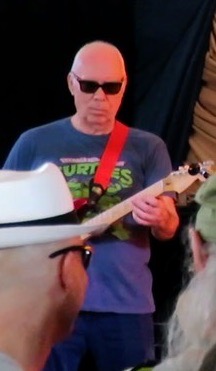
 Michot's Melody Makers are an electric string band pushing the boundaries of Cajun traditional music. Under the d1rect1on of fiddler and Lost Bayou Ramblers co-founder Louis Michot, the Melody Makers reinvigorate historic compositions and introduce sublime new melodies, all while evoking soundscapes inspired by a time when drums and amps first electrified Cajun music.
Many musicians would be just fine with earning the kind of success seen by Lost Bayou Ramblers, but Louis Michot's creative spirit can’t be satisfied. Even as he helps shape the genre's present and future, he's reviving a lost world of Cajun music.
"I have hundreds of other songs I want to play," Michot says. "Classic Cajun songs, obscure Cajun songs, all these different things that have almost never been played by modern bands."
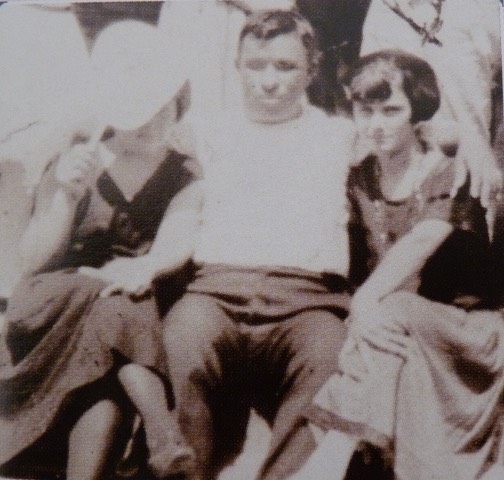
Michot was inspired by 1920s recordings by the likes of Blind Uncle Gaspard and Delma Lachney when he started the Melody Makers. A fiddle band, the group plays ballads and dances that feature rhythms and melodies unlike the common, accordion-based vein of traditional Cajun music. In the early 20th century, Michot explained, before accordion became Cajun music's dominant instrument, the lighter, melodically versatile fiddle held sway.
But the Melody Makers use electronic instruments and modern, rock aesthetics to reinterpret those traditional, fiddle-focused Cajun songs. They blend traditional fiddle and triangle with sampling, electric guitar, electric and acoustic bass, and drums. And Michot's passionate singing echoing through a reverb well.
"Not everyone is going to listen to the same music that their parents and grandparents listened to," Michot reasoned. "To me, 'authentic' is doing what comes naturally, and that keeps things current."
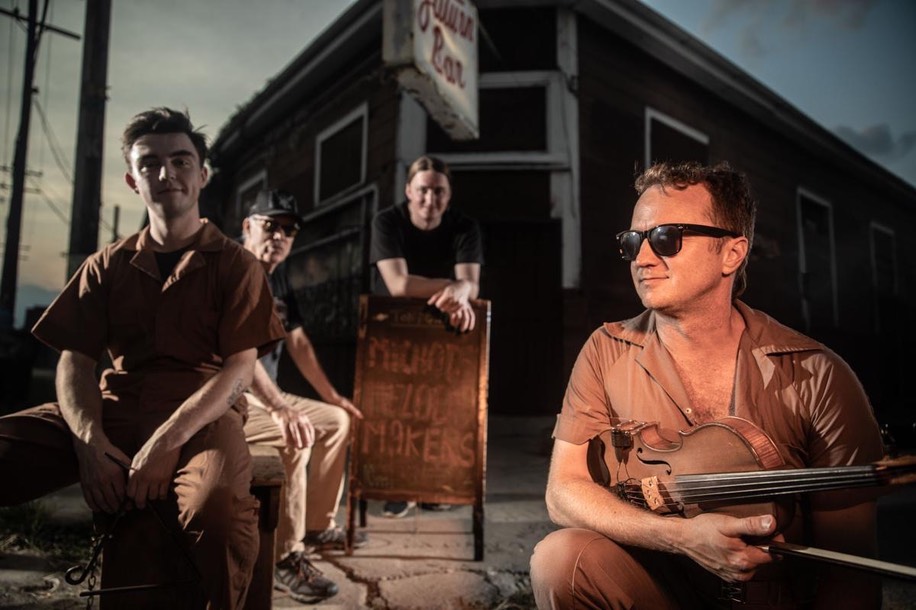
Michot started the Melody Makers in 2015, working with a flexible lineup. By spring 2016, a core trio of Michot, bassist Bryan Webre and drummer Kirkland Middleton from the Lost Bayou Ramblers had developed. In 2018, after guitarist, producer and engineer Mark Bingham sat in with the band at Bayou Teche Brewing in Arnaudville, he became the fourth Melody Maker.
"Mark had never played Cajun and Creole music in his life, but he had recorded (zydeco musicians) Boozoo Chavis and John Delafose, all kinds of people," Michot said. "Because he has such a great ear and he's familiar with the music, he fit in amazingly."
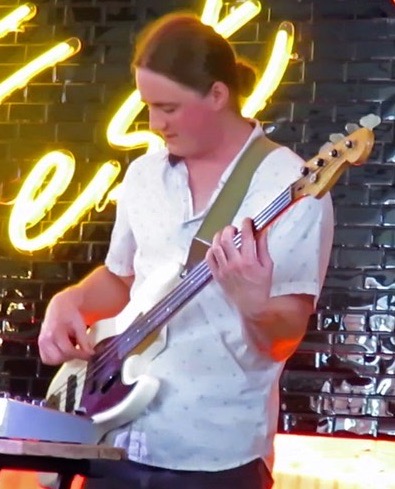

Initially, weekly shows at the Saturn Bar in New Orleans simultaneously helped the band solidify its set list and become even more adventurous. The Melody Makers' artistic reach and audience grew each week. "But the first gig, there was almost no one there," Michot recalled. With little need to please an audience, the Melody Makers ended their opening night at the Saturn Bar with an impromptu jam. Because it felt so good, they began every subsequent night of the residency with a jam.
"We've been doing that ever since," Michot said. "Every time we play a gig, I bring new songs and we just play them."
Consistently introducing new material to the band is one of the ways Michot pushes his own horizons. "To me, it's all about this being my time and my place to learn and explore and make my own music," he said. "That's why I find it important to have multiple outlets."

"Every week the audience picked up tremendously," he said. "By the end of the month the place was rocking." That was certainly true today. The music was hot, and so was the Rhythmporium. But not enough to keep me out!
Audio/Video: Here is my video from today, and here they are in the Saturn Bar on a Saturday night.
That's twice we've encountered favorite musicians in this intimate space, certainly one to keep an eye on in the future. Another favorite musician was playing at the Fais Do Do stage, where I was to meet Laurie, who was coming from the Jazz and Heritage stage.
Baby Boyz Brass band
Laurie, at the Jazz and Heritage stage
Seen Before: First Time!
At age 16, Glen Hall III, leader of the Baby Boyz, learned the second-line culture from his father, Glen Hall Jr., who organized the Baby Boyz after bringing the family home after the flood caused by the failure of the Federal levees following Hurricane Katrina. He began playing trumpet at age six, when his cousin Glen David Andrews gave him his first horn. He has become so good that recently he joined Kermit Ruffins, James Andrews, and Shamarr Allen in the trumpet jam session that caps off each year's Satchmo SummerFest and more than held his own.
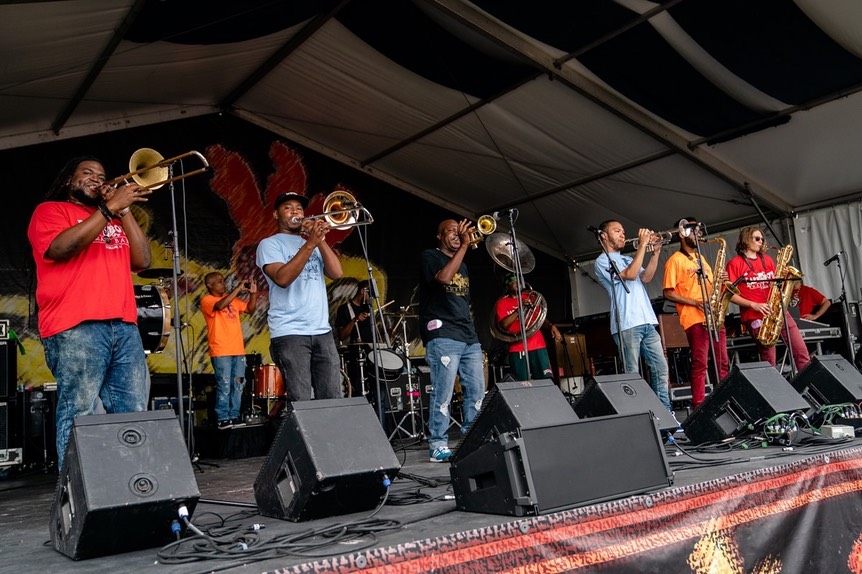
"He's really good," says James Andrews (another cousin, whose son Jenard plays trombone with the Baby Boyz). "He knew what to do up there. That whole band is coming along real good."
Hall also represents a new era of New Orleans trumpeters. Though he learned the ways of the second line from his elders in the old school style, he was also a student a the New Orleans Center for the Creative Arts (NOCCA), where he learned another discipline.
"The second-line parades are about playing in the streets," he says. "You have to know your part and keep playing, and everything falls into place. At NOCCA, it was more about single-line improvisation, more like be-bop, jazz." He went on to graduate from the University of New Orleans.
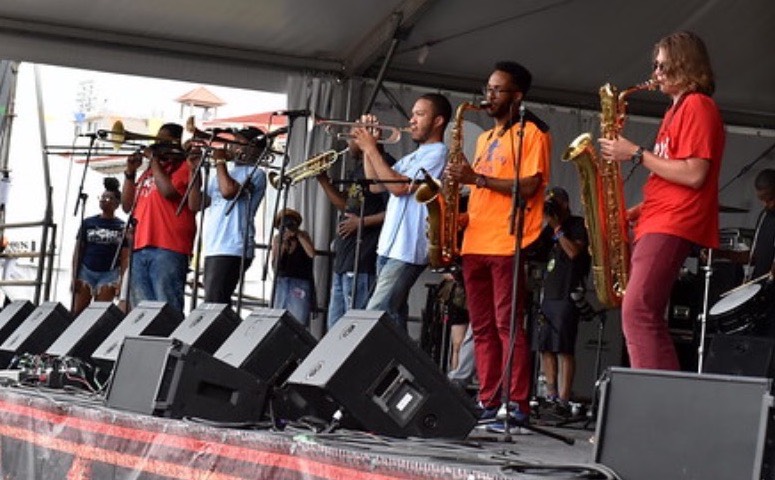
Ruffins has known Hall all his life and has frequently called on him to perform. Hall says he hopes to also follow in the footsteps of another NOCCA graduate, Wynton Marsalis. "I guess Wynton is my goal, but I like to play like Kermit, too," he says. "Really, I'd like to be a combination of all of them."
When asked to name the New Orleans musician he most admires, Hall keeps it in the family. "It's my cousin Troy, Trombone Shorty," he says. "He's the one who inspired me to do this."
Audio/Video: Nothing from today, and the only one I could find was from a long time ago. But it's great brass band music, so enjoy.
After this brief time apart to start the day, we met at the Fais Do Do stage.
Leyla McCalla
Jeff and Laurie, at the Fais Do Do stage
Seen Before: Not at Jazz Fest, but at the Civic Theater on Day 9 in 2017 with Hurray for the Riff Raff.
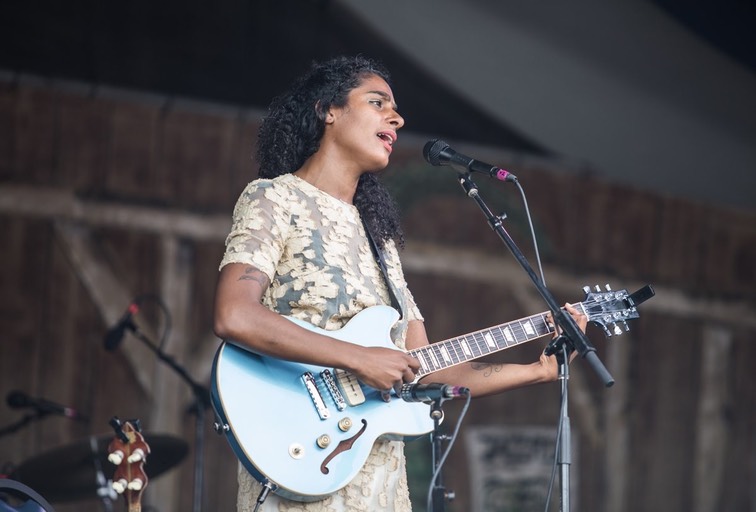
Leyla McCalla has largely conducted her career as a lone wolf, performing with just her cello or her banjo, or on occasion a second voice or instrument as she explored her Haitian Creole heritage. Many people first encountered her as a member of the Carolina Chocolate Drops, but that, too, was a fairly intimate acoustic ensemble.
Her path has become less solitary, though. Recently she has invited other local artists on a similar musical path, including Louis Michot (see above) and Don Vappie, to make guest appearances, and on her most recent recording worked with a full band backing her.
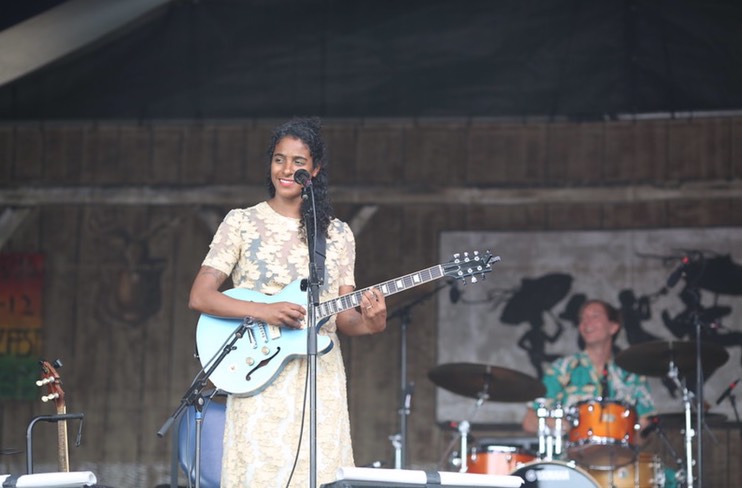
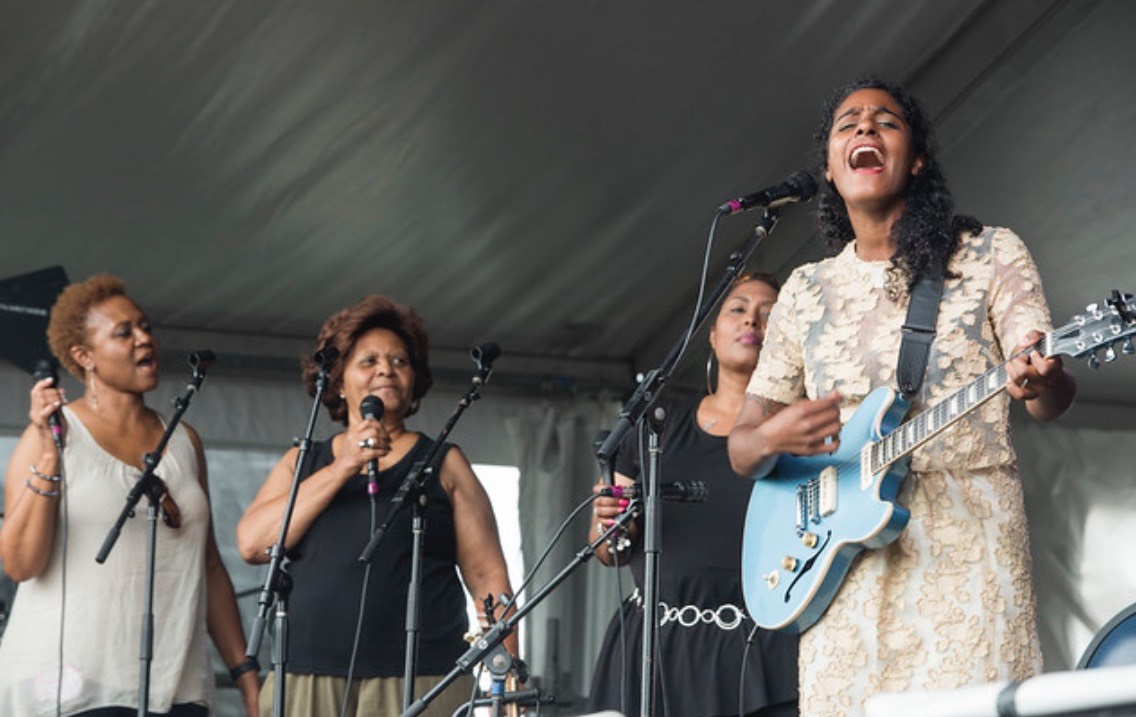
The results embrace community on a number of levels. McCalla literally surrounds herself with people, and she makes herself more of a part of the New Orleans music community by playing with local musicians. The lyrics speak to concerns that are very real in the community she lives in, including elevated lead levels in drinking water, a problem that became real for her when one of her children was found to have elevated lead levels. As the album title, Capitalist Blues, suggests, the growing gap between the haves and have-nots is on her mind as it iss affecting New Orleans and the rest of the country.
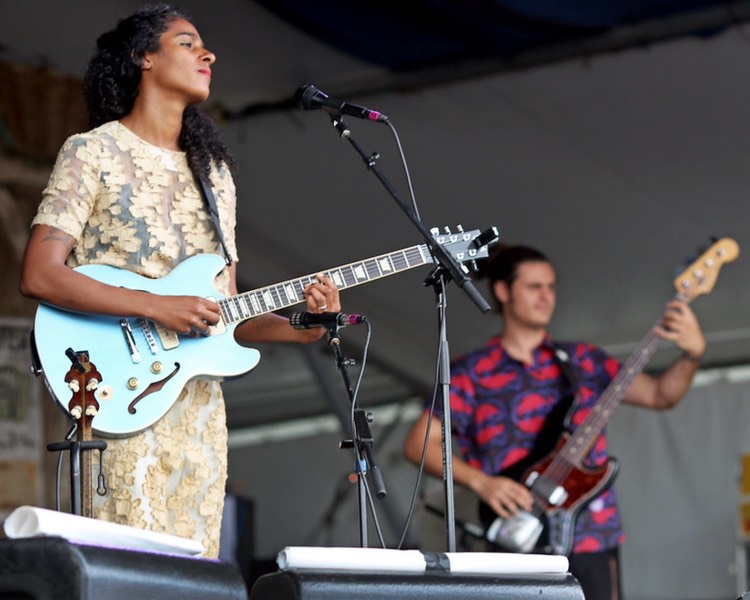
"I always imagine the songs as their own little worlds," she says, "connecting them to each other through the history of New Orleans, where Haiti plays a huge role in shaping Louisiana culture and history in general."

"I find that adapting my songs to a band is not the issue. It's more, can the band adapt to playing my songs. Though the songs generally have a lighter touch, it's been very life-affirming to expand the dynamic range and potential of the songs while also maintaining the sense of intimacy and thoughtfulness that I like to put into my arrangements."
McCalla performed with a band when she played Jazz Fest today, and she was joined at times by New Orleans vocal group Topsy Chapman and Solid Harmony and zydeco great Corey Ledet. The whole performance was simply wonderful, and it was an unexpected thrill to see Topsy Chapman and her daughters.
Audio/Video: Here's my video, here is another from today, and here are the Munck Music excerpts of all the songs in the set. For a full experience, here is an hour from a local outdoor concert, the Rosslyn Jazz Festival.
Laurie was off to the WWOZ tent for a break and then heading to the Acura stage, where I would join her. But first I had an annual appointment next door.
Donald Harrison Jr.
Jeff, at the Congo Square stage
Seen Before: Day 3 in 2012, Day 8 in 2014, Day 9 in 2015, Day 2 in 2016, and Day 3 last year. Also in a special performance at the Orpheum Theater on Day 6 in 2016, at Snug Harbor on Day 6 in 2014, and with Dr. Lonnie Smith on Day 6 in 2013, Day 6 in 2015, Day 9 last year, and Day 2 this year.
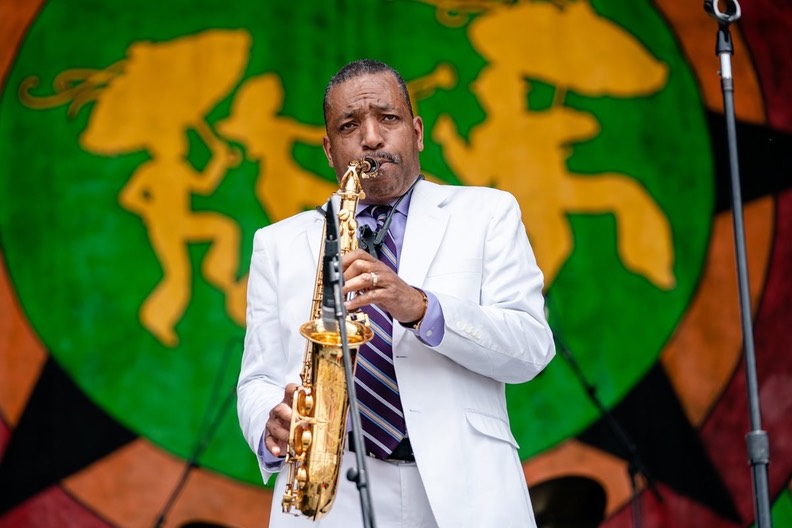
There is not much more to be said about this alto sax legend and New Orleans music legend (both separately and melded together) that hasn't already been said in this series of blogs. The man explores reggae, funk, swing, R&B, New Orleans second-line music, and Mardi Gras Indian chants, all through the filter of modern jazz. His band is always top-notch, and the show is always fantastic.

If you didn't know, Harrison is yet another product of the New Orleans Center for the Creative Arts, where he worked with Roy Haynes, Jack McDuff, and others. After graduating, he joined Art Blakey’s Jazz Messengers. As a bandleader and in his own right, he has worked with a who's who of jazz greats, including Miles Davis, McCoy Tyner, Lena Horne, Ron Carter, Billy Cobham, Eddie Palmieri, and Dr. John.
In his own bands, Harrison has carried on the legacy of Art Blakey, continually nurturing the talents of young players. And if that wasn't enough, the devastation left by the floods resulting from the failure of the Federal levees after Hurricane Katrina inspired him to recommit to his New Orleans roots, keeping a strong emphasis on his father's Mardi Gras Indian heritage by becoming Big Chief of the Congo Square Nation.


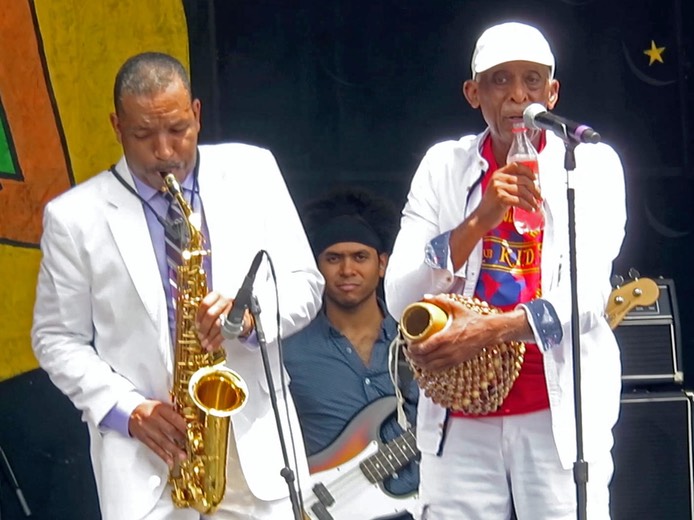
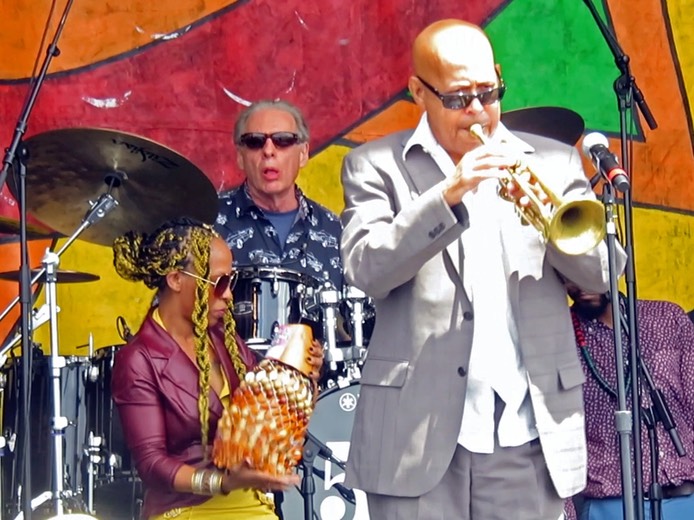
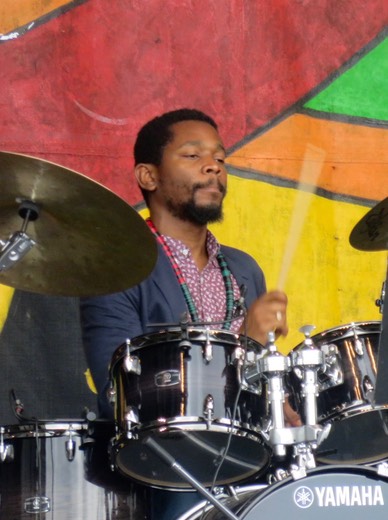
Today, in addition to his great band, which includes the legendary Bill Summers on percussion, Harrison was joined by two more jazz legends, drummer Mike Clark and trumpeter Dr. Eddie Henderson. These four jazz icons jammed for awhile and then launched into the great Headhunters tune "Watermelon Man." Summers played the song in and out with percussion and a coke bottle. The whole set was great but this portion was jaw-dropping.
Audio/Video: Here's my video so you can see this awesome Jazz Fest moment, and a bit more, for yourself. Here are the Munck Music excerpts of today's set, and here's a half hour recorded during WWOZ's fall membership drive this year.
Laurie was already at the Acura stage, so I hurried over there to join her.
Voice of the Wetlands All Stars
Jeff snd Laurie, at the Acura stage
Seen Before: Day 3 in 2013, Day 9 in 2015, Day 8 in 2017, and Day 4 last year.
Laurie has spent more time with this great amalgamation of Louisiana musicians in the last couple of years, so I decided it was high time that I see a lot more of them from up close, which was still possible at the Acura stage at this time of day.
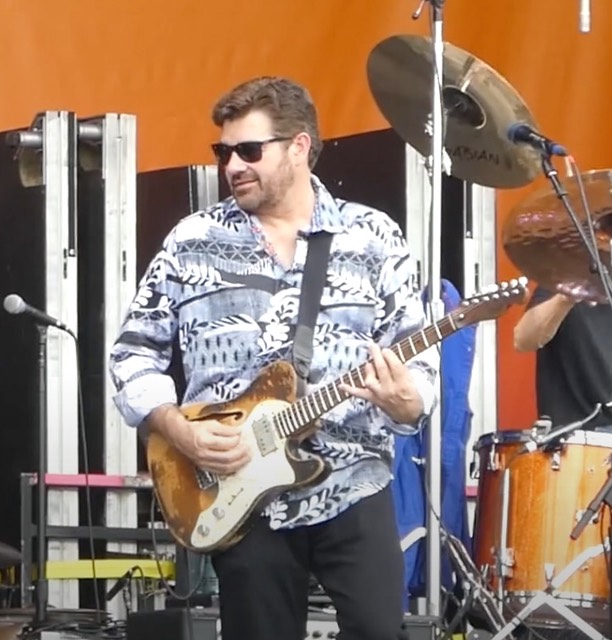
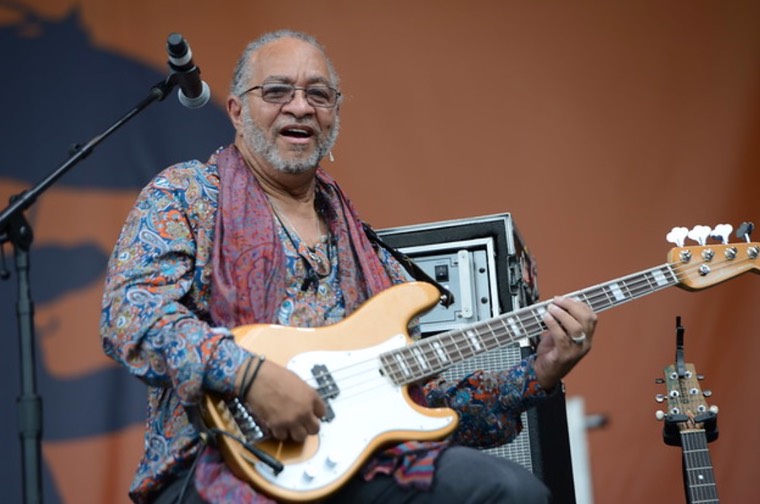
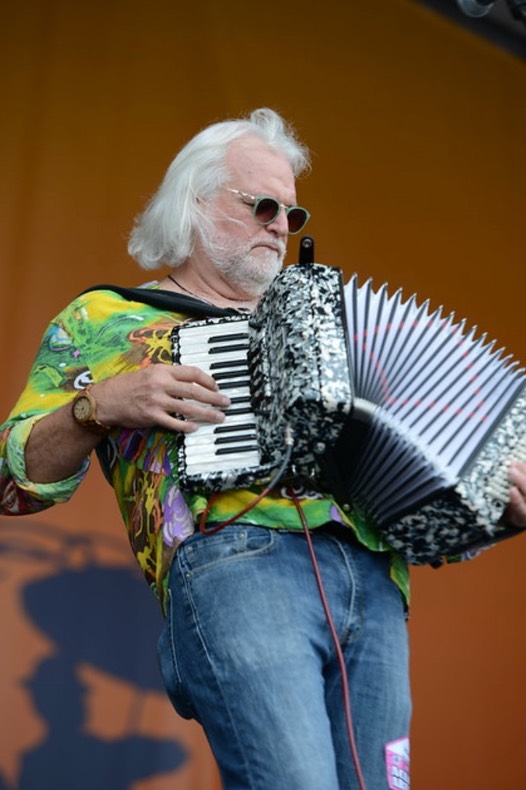
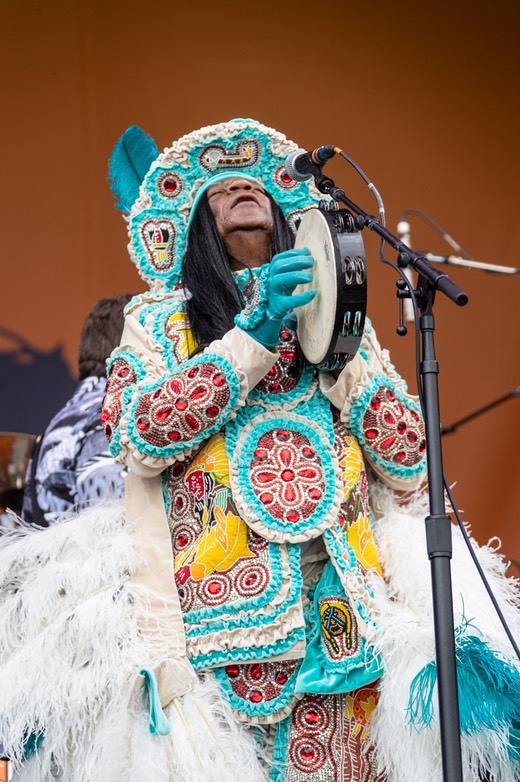
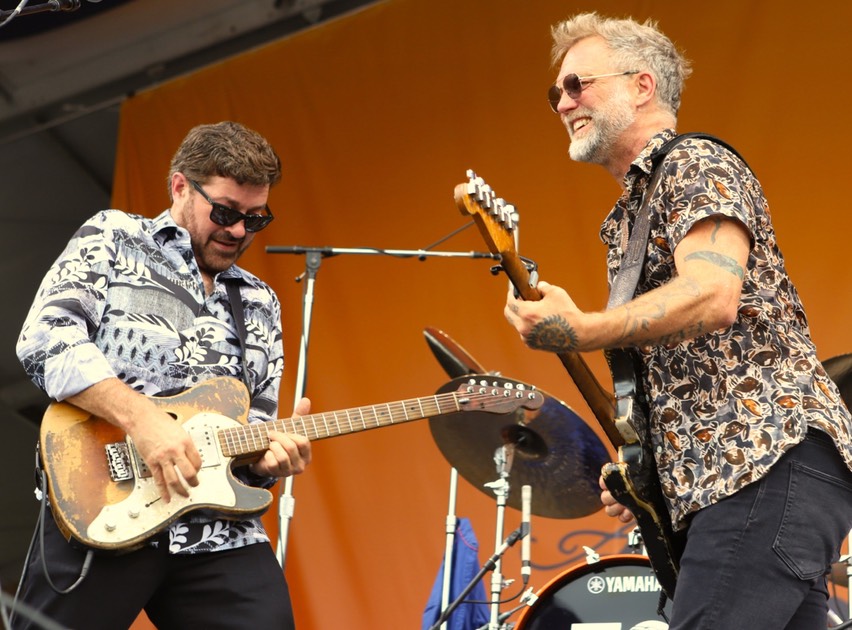
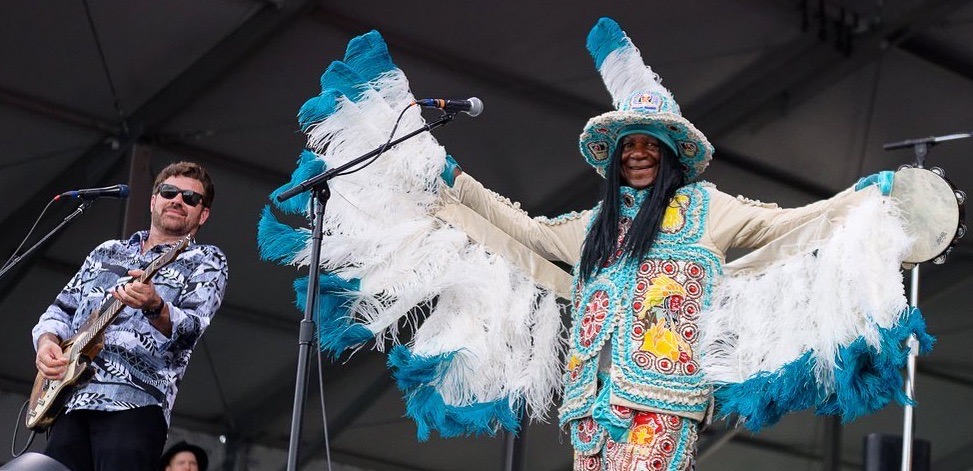
Truly an incredible group of all stars was on the stage: Tab Benoit and Anders Osborne on guitars, George Porter Jr. on bass, Johnny Vidacovich on drums, Waylon Thibodeaux on fiddle, and Johnny Sansone on harmonica and accordion. Eventually they were joined by Big Chief Monk Boudreaux of the Golden Eagles Mardi Gras Indians. Wow!
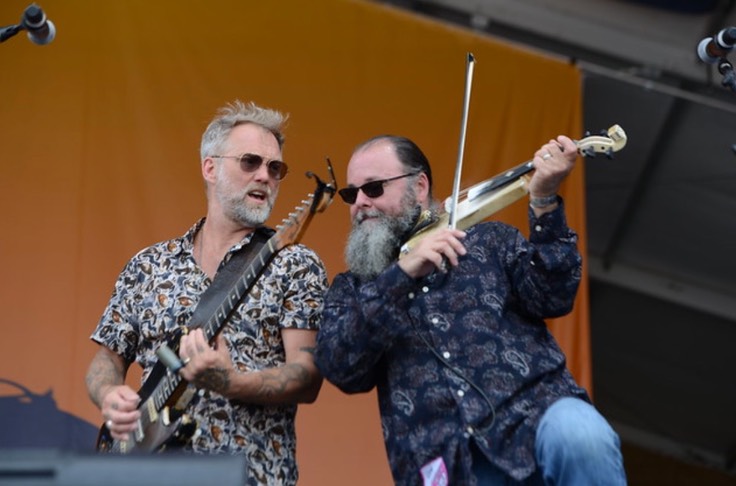
This would be great music even if they were just there to play, but they get together and play for a cause, which makes it even more special. More than 10 years ago, Benoit became an advocate for preserving the Cajun way of life and driving awareness about the loss of wetlands in southern Louisiana. He and many of the artists playing with him today organized the Voice of the Wetlands to advocate for this trasured but almost ctiminally ignored natural resource. Not too long after, in 2004, the first Voice of the Wetlands Festival was born to celebrate and advocate for the Cajun way of life, including cuisine, music, and more. That festival is still held every year in Houma, Benoit's home town, in October.
Louisiana’s coastal wetlands are some of the most productive ecosystems in North America. Not only do they provide habitat for numerous fish, wildlife, and bird species, but they also help improve water quality, provide recreational opportunities, and protect people and infrastructure from damaging storm surges.
Wetlands serve as a nursery environment for juvenile fish. The countless ponds, bays, and bayous found in the Mississippi River Delta provide essential habitat for most commercial and game fish found in the Gulf of Mexico. Menhaden, shrimp, oysters, and blue crab are all important commercial species that depend on healthy coastal wetlands to thrive. Additionally, fur-bearers like muskrat, beaver, and mink, as well as reptiles, including alligators, call coastal wetlands and estuaries home.
Wetlands have an incredible value for people, too. One acre of wetlands has the capacity to hold up to 1 million gallons of water during a flood. On average, damaging storm surges are reduced by one foot for every 2.7 miles of wetlands, reducing wave energy and protecting levees and other critical infrastructure from these destructive forces of nature. The value of community protection for a one-mile strip of wetlands is valued at $5.7 million.
Wetlands also help improve water quality by filtering and retaining residential, agricultural, and urban wastes. Reconnection of the Mississippi River to surrounding wetlands would help filter out nutrients that are contribute to a harmful low oxygen area in the Gulf of Mexico dubbed the "dead zone." The shallow waters of coastal wetlands are good habitat for submerged aquatic vegetation, which can utilize the extra nutrients and potentially reduce the Gulf of Mexico dead zone as well as increasing water clarity.

Louisiana holds 40 percent of the coastal wetlands in the continental U.S. and is currently experiencing around 80 percent of all coastal wetland loss in the United States. Work is currently underway to restore and rebuild wetlands in the Mississippi River Delta through projects in the state's Coastal Master Plan, including sediment diversions and marsh creation. The reintroduction of Mississippi River water and sediment to its delta plain allows new wetlands to build and flourish, providing habitat for wildlife, clean water, places to recreate, and protection for storm surge.
"I live in the heart of it," Benoit said. "I grew up on 300 acres. We have 40 left. That's a big deal. You tell anybody who has 300 acres of land in 20 years you're going to have 40. It's not that somebody took the land. It's not land anymore. It's open water. The places I wrote my first songs are gone. The places I learned to play and camp and hunt and fish are gone. It's open water now. It used to be cypress swamps and bayous and trees. That hits home when it happens so fast."
A cause worth supporting, for sure.
Here is the video I took at the Voice of the Wetlands concert today, and here are one and two more that somebody else took.
By the time this performance ended, the next one we wanted to see had already started, so we hurried over to the Fais Do Do stage.
Lost Bayou Ramblers
Jeff and Laurie, at the Fais Do Do stage
Seen Before: Day 3 in 2013, Day 9 in 2014,
Day 3 in 2015, Day 8 in 2016, Day 3 in 2017, and Day 11 last year. Also Louis Michot's Meoldy Makers today and Michot with Goldman Thibodeaux on Day 9 last year.
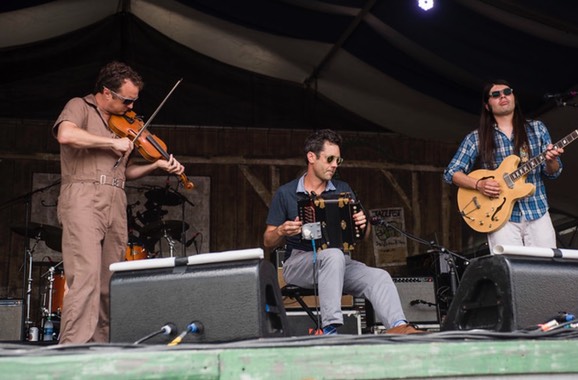
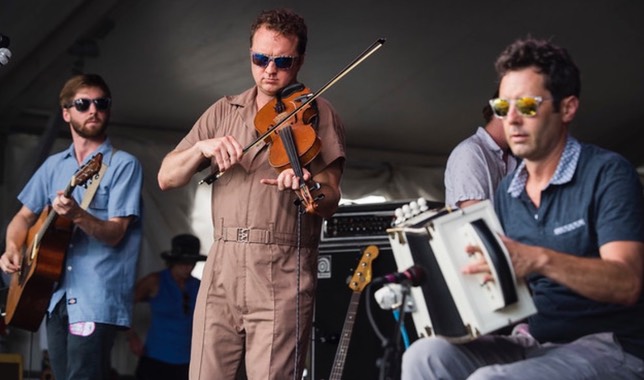
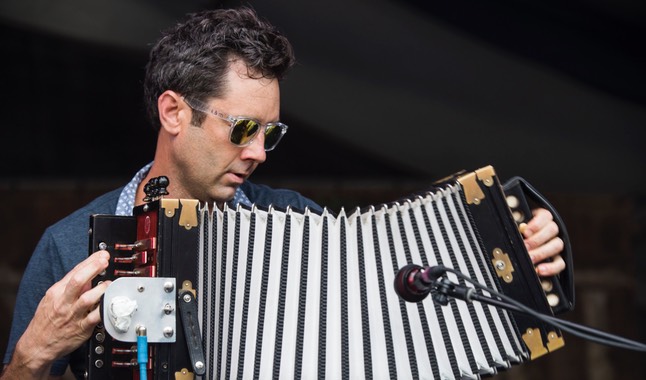
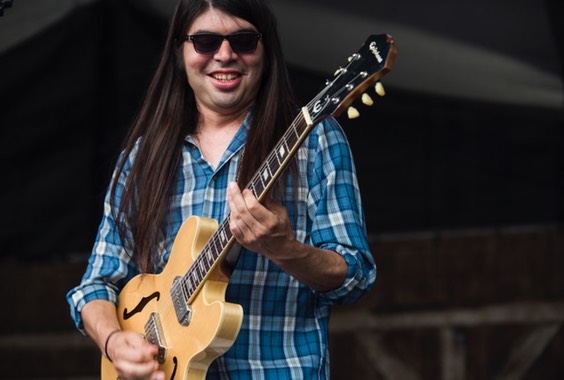
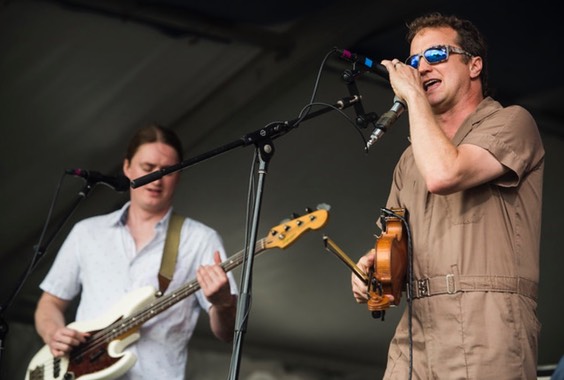
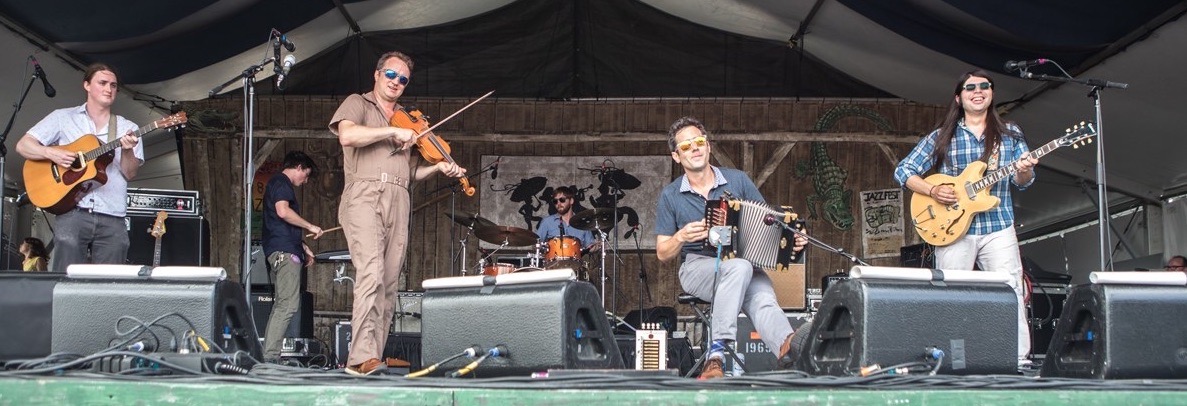
We have sung the praises of this modern Cajun rock band many times, and their music is always exciting, challenging, and redefining one's expectations of Cajun music. Louis Michot on fiddle, Andre michot on accordion and lap steel guitar, bass player Bryan Webre, drummer Kirkland Middleton, and guitarist Johnny Campos are grounded in the past but have no fear of exploring the future.
Audio/Video: Here is my short video of today's show at the Fais Do Do stage. We were pretty far back in the big crowd there, so here's one and two from down front. Here's a full concert from Lafayette awhile back.
Before we went our separate ways for awhile, we grabbed some food.
Food! Cochon de lait po'boy
Jeff
Had Before: Yes. Day 2 in 2012, Day 8 in 2013, Day 3 in 2014, Day 3 and Day 11 in 2015, Day 2 in 2017, Day 12 last year.
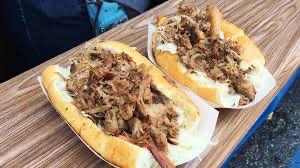
This sandwich, from Walker's Barbecue, is always awesome. If there was no other food at Jazz Fest, that would be OK. The main ingredient is a pulled pork that was smoked for over 13 hours. Add in some fresh cabbage and a creole mustard mayo sauce, and the combination turns out to be pretty potent blend of sweet, salty, and savory, with a little hint of a kick. It's definitely "the best butt in town." Check out this video that shows it being made in all its glory.
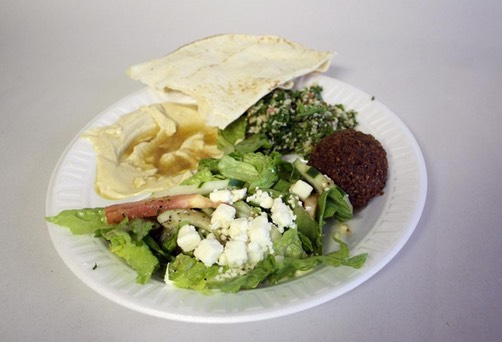 Food! Middle Eastern platter
Laurie
Had Before: Day 9 in 2015, Day 11 in 2016, Day 11 in 2017, and Day 9 last year.
The Middle Eastern platter from Mona's Café of New Orleans has it all: falafel, hummus, tabouli, Greek garden salad, and pita bread. Fresh and delicious.
Cha Wa
Laurie, at the Jazz and Heritage stage
Seen Before: Day 10 in 2013, Day 10 in 2015, and Day 4 last year
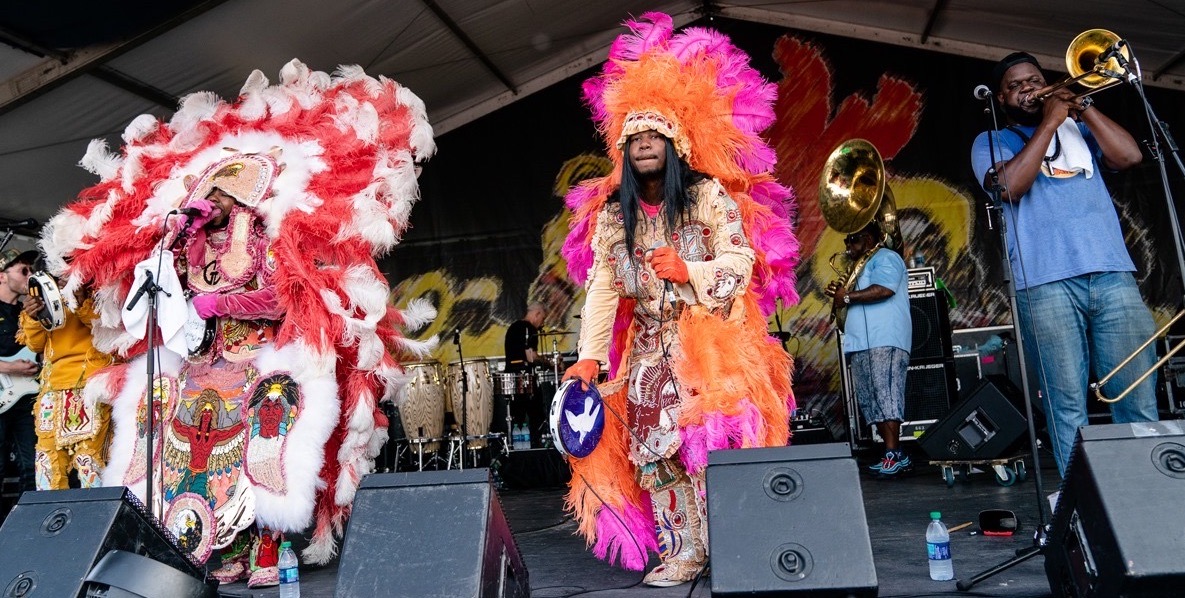
Laurie chose to end her day with funk and blues (although in the end that changed). From their funk-laced beats and bass-heavy sousaphone blasts to the gritty warmth of singer J'Wan Boudreaux's voice, 'New Orleans brass band meets Mardi Gras Indian outfit' Cha Wa radiates the fiery energy of the best features of the city's street culture.
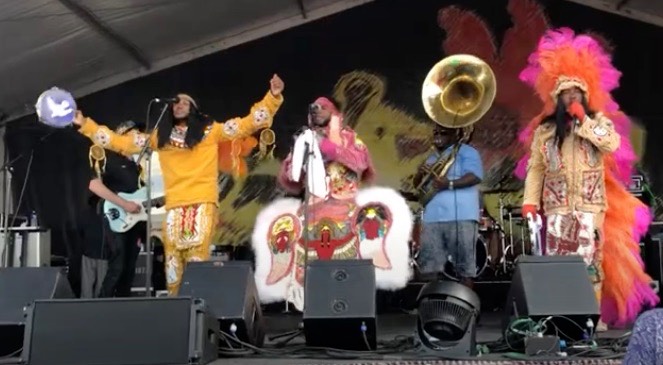
Boudreaux grew up singing alongside his grandfather, Big Chief Monk Boudreaux, in the Golden Eagles Mardi Gras Indian tribe. Now he is digging deeper into the sound of New Orleans culture and giving it a modern twist. The band's largely original material takes advantage of a horn section to highlight its personal ties to the street music of New Orleans. "We wanted to take the roots of what we love about New Orleans brass band music and Mardi Gras Indian music and then voice it in our own way," says the group's drummer and founder, Joe Gelini.
Dating back to the late 1800s, the Mardi Gras Indian tradition began when African-American men first marched in Native American dress through the streets of New Orleans on Mardi Gras day. The tradition, which includes a host of songs and chants shared among the various tribes, has been kept alive for more than a century and today is as vital as ever. Mardi Gras Indians have influenced the biggest names in New Orleans music: The Meters, Dr. John, the Marsalis family, the Neville Brothers, Trombone Shorty, and many others. The most prominent Mardi Gras Indian today is Monk Boudreaux, the Big Chief of the Golden Eagles tribe. His grandson J'Wan (who holds the position of Spyboy in the Golden Eagles) is stepping up with Cha Wa to propel their culture forward.
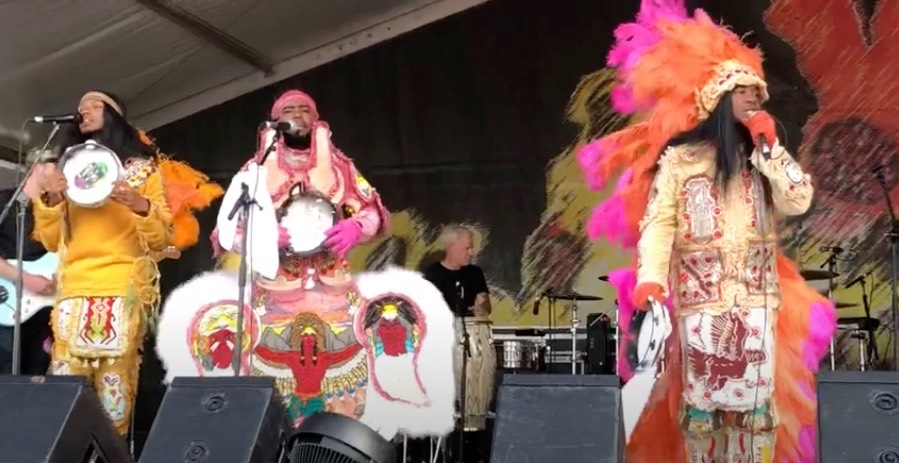
J'Wan joined the group when he was still in high school. At the time, Gelini, then a recent Berklee School of Music grad, had been playing drums for Boudreaux's grandfather, having learned the traditional Mardi Gras Indian beats from original Wild Magnolias (led by Big Chief Bo Dollis) bass drummer Norwood "Geechie" Johnson at Sunday night Indian practices in Uptown New Orleans. As the band evolved, J'Wan emerged as the front man. Boudreaux's vocals (with support from Thaddeus "Peanut" Ramsey's smooth-voiced Indian style), the booming, funked-up sound of the band's new four-part horn section, and Gelini's mix of second-line grooves and soulful Indian rhythms have all combined to kindle a new fire in Cha Wa's ever-developing sound.
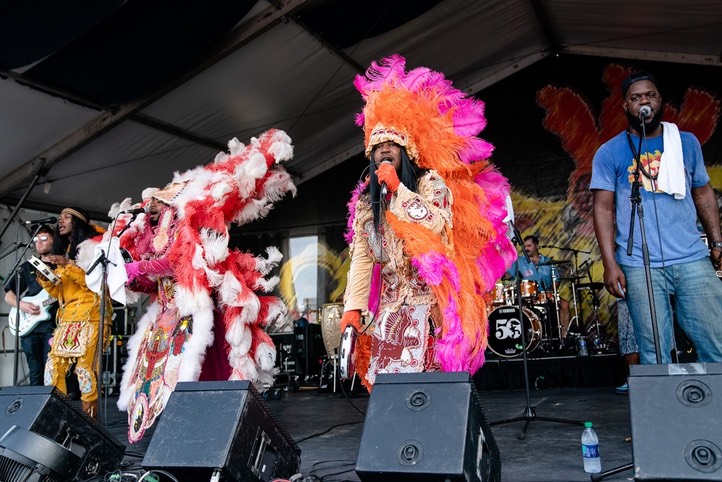
With songwriting contributions from Gelini, Boudreaux, and Ramsey, plus band members Joe Maize, Ari Teitel, and Clifton "Spug" Smith, Cha Wa ignites an entire new generation with contemporary anthems set ablaze by its high-flying ensemble. Says Boudreaux, "Everyone put their minds together to make this music. Everyone had input on at least one song. And the whole band has a different type of connection these days. Everybody's bonded now. Everybody's just having fun."
Cha Wa, with their loose, 1970s funk rhythm, tight horn parts, and deep, bouncing sousaphone, brings that celebratory vibe to life by spiking a traditional Indian phrase with a fast-moving brass band twist.
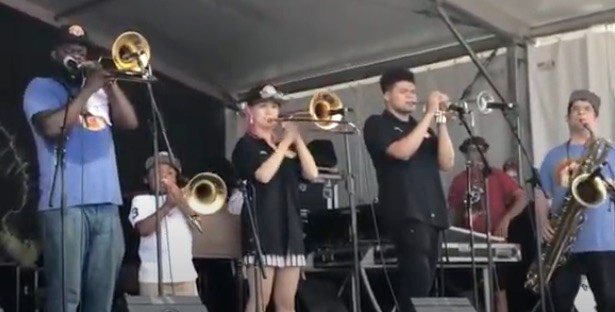
"We dress up in the Indian suits to pay homage to the Native American Indians, because around the time of slavery, they were the first ones to take us in," he says. "Everything on our suits is handmade -- the beads, the patterns, we sew together pieces of fabric and make the panels, we make the boots -- everything."
Not that you need a firm understanding of Mardi Gras Indian or brass band culture to feel the dance-ready vibrations of Cha Wa's new music. "It's dance music so I think people are attracted to it. Even if people have no idea what the history is, it's automatically infectious," Gelini explains. "J'wan's the next generation," the drummer adds. "He's keeping this flame lit."
Audio/Video: Here's what they looked like at Jazz Fest today, and here is a full hour of Cha Wa from the New Orleans Jazz Museum in the Old U.S. Mint
Next, Laurie headed over to the Gentilly stage to get the blues.
Gary Clark Jr.
Laurie, at the Gentilly stage
Seen Before: First time!
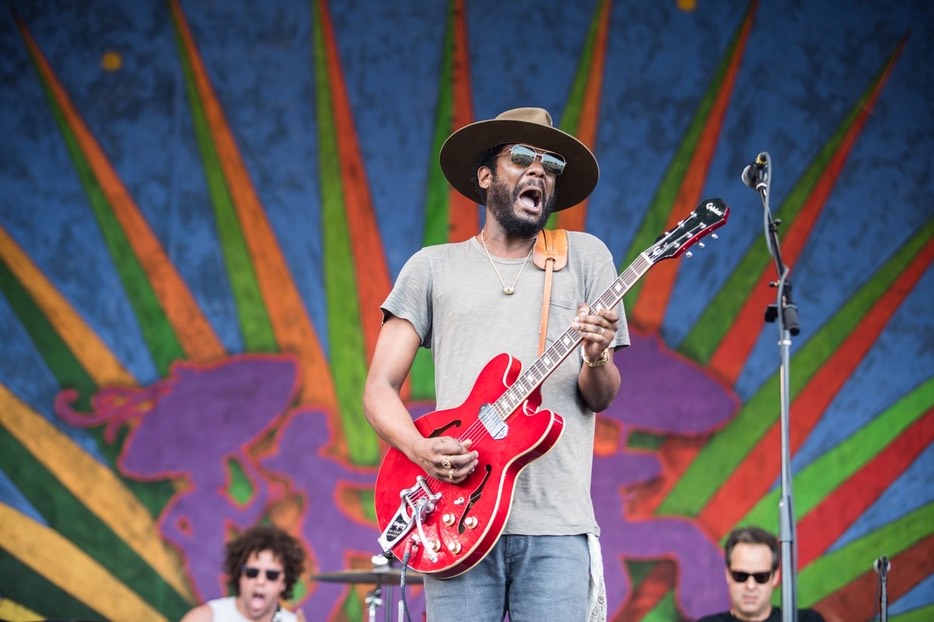
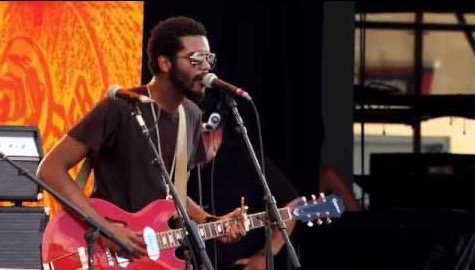
Gary Clark Jr. has been at Jazz Fest quite a couple of times since we have been attending, but this is the first time either of us have seen him here. He comes out of Austin, Texas, and is best known for his fusion of blues, rock, and soul music with elements of hip hop. He began playing guitar at age 12. He played small gigs around Austin throughout his teens, until he met promoter Clifford Antone, proprietor of the Austin music club Antone's. Antone's was the launch pad from which Stevie Ray Vaughan redefined blues. Soon after meeting Clifford, Clark began to play with other musical icons, including Jimmie Vaughan, who helped him along his musical path.
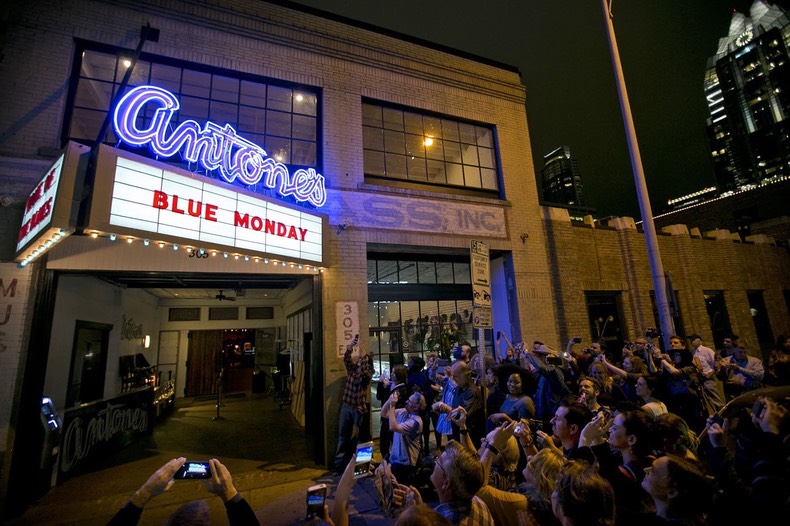
An incredible live performer, Clark soon became one of the brightest players on Austin's blues and rock scene. He released an independent album, 2005's Tribute, followed by a pair of self-produced albums in 2008, 110 and Worry No More. A self-titled EP also appeared from Hotwire in 2010.
Clark's sound has drawn praise from fellow Texan Billy Gibbons of ZZ Top, among others. It might be huge, but his artistic process is closer to the DIY creations that emerged in the four-track era of the 1980s. This is how he constructs his records, starting alone by building demos, without lyrics, in an out-building behind his house before taking them into Austin to turn them into fully realized songs. He can bang out a country blues on an 80-year-old resonator guitar, and is just as comfortable grabbing a sample to drop into another song.
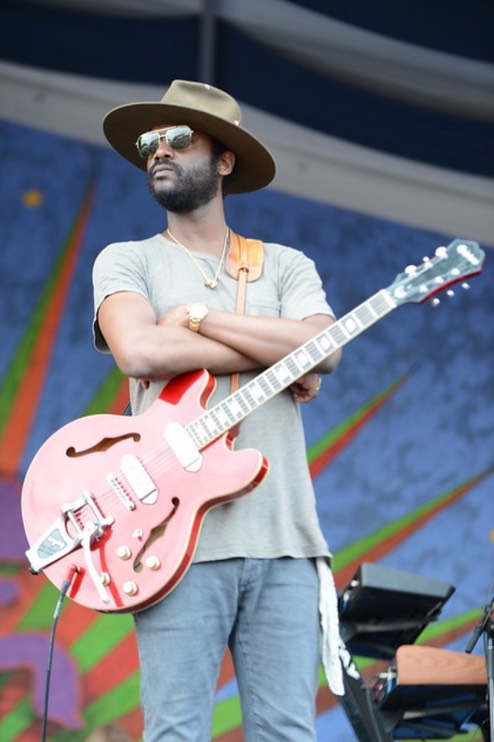
With his acclaimed Blak and Blu, (listen here), Clark emerged at the dawn of the 2010s as the great hope for modern electric blues. He spent the rest of the decade fulfilling that promise, both by continuing the blues-rock tradition and expanding it to encompass contemporary funk, rock, and hip-hop. Initially, he played his cards relatively close to the vest, emphasizing the blues heritage of his Austin hometown. But Clark quickly took risks other contemporary blues guitarists didn't, collaborating with R&B singer Alicia Keys and modern rockers Foo Fighters, while branching out to political protest on the charged 2019 album This Land.

So Clark was far from just a one-trick-pony guitar gunslinger. He could also sing, write, and arrange. In 2010, Clark was selected by Eric Clapton to perform at the Crossroads Guitar Festival, and a video release of the show featuring Clark led to the recording deal that resulted in Blak and Blu. His next release was the impressive two-disc Live, which better represented his wild, impassioned, and often elegantly graceful live sets.
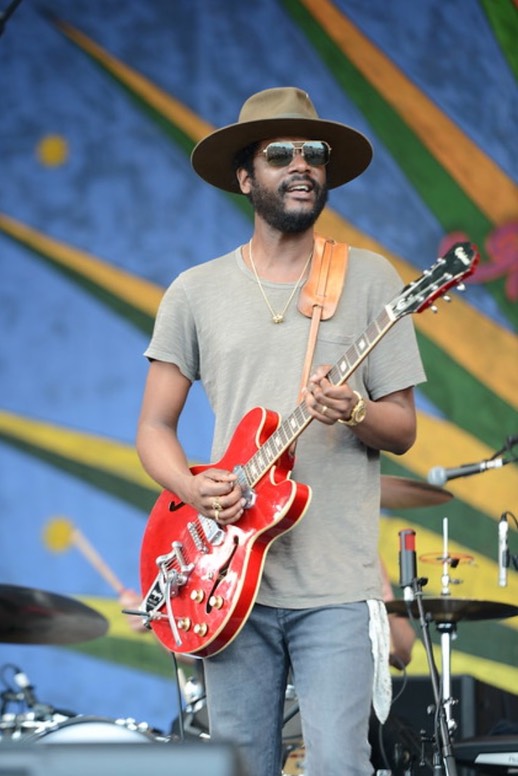
After more touring, including dates opening for the Rolling Stones and the Foo Fighters, Clark released his second major-label studio set, 2015's The Story of Sonny Boy Slim. An extensive tour supporting that recording was documented on the 2017 album Live North America 2016.
This Land followed in March 2019, reflecting the political landscape of the time through the perspective of a black American living in Texas. It picked up four Grammy nominations, including for Best Contemporary Blues Album.
Clark got his first guitar at Christmas when he was 13, an Ibanez RX20. His father, Gary Sr., who worked at a car dealership in Austin, loved music and had seen everyone from Jimi Hendrix and Carlos Santana to Joe Tex over the years. He also messed around on guitar and kept a hollow body Gibson in the garage.
"One day I came home and drove into the garage, and it wasn't hanging up anymore," Clark Sr. says. "I found it on the side, and it was in pieces. I found out later, when he was 19, that he was actually trying to put it up before I got home, and it fell down."
Clark Jr. didn't take lessons. Instead, he went to the Covington Middle School library to check out a few how-to-play-guitar books, and listened to Green Day, Nirvana, Jimmy Reed, and Stevie Ray Vaughan.
"Within a day and a half or so, I'm walking down the hallway and he's in there playing," his father says. "Wait a minute. Is that the radio or is that him? I called my wife up and opened up the door, and there he was playing note-for-note Jimi Hendrix."
Clark started jamming with a friend from the neighborhood, Eve Monsees. They had their first gig on her 15th birthday -- Monsees's parents took them to an Austin club for a blues jam.
"We did a couple songs that we do, and the guy who ran the jam got up to sing the song and shouted out, 'Key of A from the 5,'" Monsees recalls. "And we looked at each other and said, 'What does that mean?'
"We were sitting a couple weeks later, sitting down at the piano, and Gary said, 'Look, this is what it means. This is the fifth note of the scale.' It just clicked. I thought it was so smart that he just figured out why they would say that."
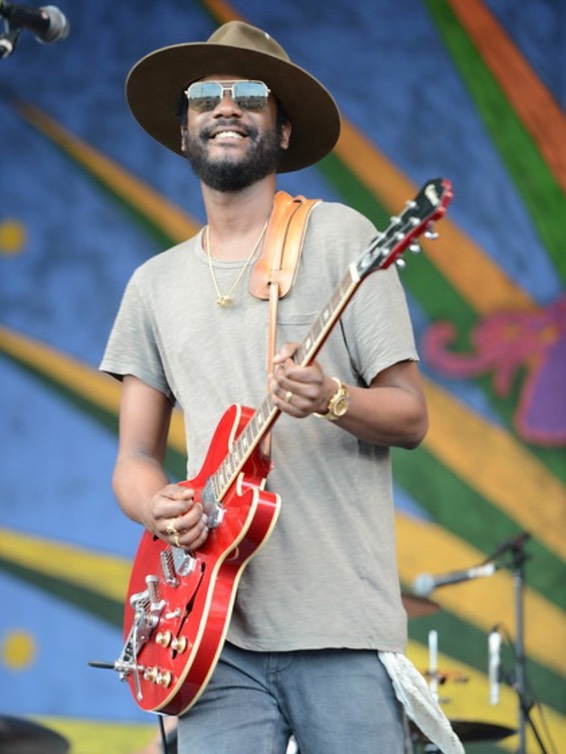
The public first met Clark in 2007, when director John Sayles cast him as a young musician in his film Honeydripper, but his musical breakthrough came in 2010. Guitarist Doyle Bramhall II, a fellow Texan and respected producer, suggested Clark to Clapton for the Crossroads Festival. The short set changed everything. Clark cut a stylish figure onstage with his aviator sunglasses, black T-shirt and red Casino guitar.
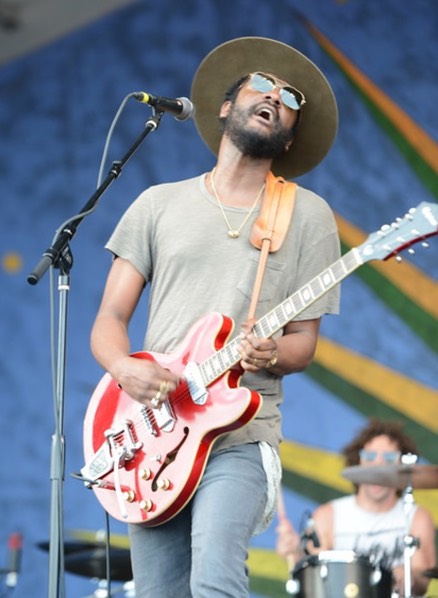
"I remember seeing him and thinking, 'Look at this guy, he's a bad ass,'" says Weintraub, who was working on the festival with Clapton. "Everybody was kind of freaking out over him. I remember getting texts during the show, people were like, 'Who the hell is this guy?'" The breakout set at Crossroads set Clark off on his career, and Weintraub signed Clark to a management contract.
"So I asked him, 'What do you want to be?'" Weintraub recalls. "He said, 'Snoop Dogg meets John Lee Hooker.'"
Clark is compared to a lot of people. But his sound is his own. His guitar draws on Buddy Guy’s searing tone, B.B. King’s gift for ringing the perfect note and Hendrix’s blistering runs. He’s also not afraid to throw a few punk jabs into the mix, and his voice doesn't follow a road map. Clark might shout or growl or slip into his Prince-like falsetto.
Audio/Video: Here's Gary Clark Jr. at Jazz Fest today, here's 45 minutes from Miami earlier this year, and here's an hour from the Glastonbury Festival in England a couple of years ago. Really good stuff.

Laurie was doing funk and blues while I was doing jazz of all kinds.
Matthew Whitaker Quartet
Jeff, in the Jazz Tent
Seen Before: First time!
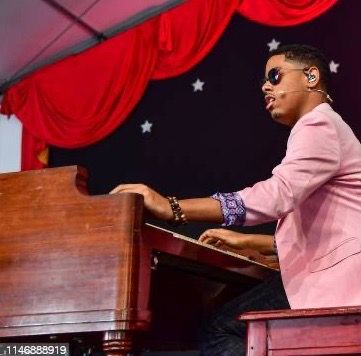
I'll always go out of my way for a Hammond organ combo, and this kid was really personable and a very good musician, too. Matthew Whitaker, from Hackensack, New Jersey, is the youngest child of Moses and May Whitaker, He was born in 2001, three months premature at 1 pound 11 ounces and blind. He showed interest in playing music at age 3, when his grandfather gave him a small Yamaha keyboard. After banging on it a few times the family noticed he was playing "Twinkle Twinkle Little Star" without anyone showing him how to do it.
Matthew's love for music with its different harmonies and melodies, especially jazz, gave birth to his true love the Hammond B-3 organ. At age 9, he began to teach himself how to play the B-3.
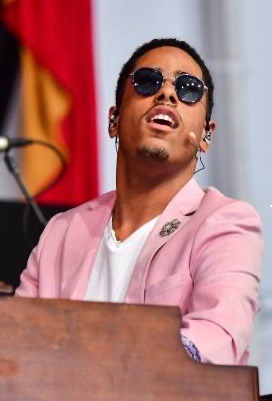
Matthew attended the Greenberg Music School for the Visually Impaired in New York City, where he studies classical piano and drums. He also attended The Harlem School of the Arts in New York, where he studies jazz styles for the piano and is a member of the Advance Jazz Combo, and Jazz House Kids in Montclair, New Jersey, where he is a member of the organ ensemble.
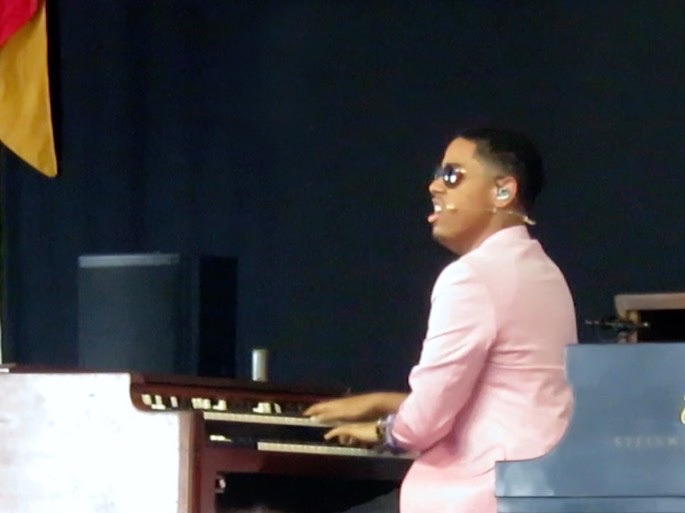
Needless to say, he has performed all over the world and at some of the most prestigious venues and festivals. And he has written a number of original compositions. His artistic influences are composers/musicians Dr. Lonnie Smith, Jimmy Smith, Jimmy McGriff, Rhoda Scott, Joey DeFrancesco, Charles Earland, Radam Schwartz; Stevie Wonder, D.D. Jackson, Art Tatum, Ahmad Jamal, Thelonious Monk, Bud Powell, Chick Corea, and Jon Batiste, and drummers Otis Brown III, Roy Haynes, T.S. Monk, Herlin Riley, and Johnathan Blake.
Whitaker's enthusiasm was infectious, and his band of Marcos Robinson on guitar, Isiah Johnson on drums, and Karim Hutton on bass was with him every step of the way. Very good stuff from someone so young.
Audio/Video: Here is my video and here is the same band for 45 minutes at Jazzahead 2019 in Bremen, Germany
From this straightahead jazz performance from a group of talented young people, I headed over to the Gentilly stage.
Kamasi Washington
Jeff, at the Gentilly stage
Seen Before: First time!
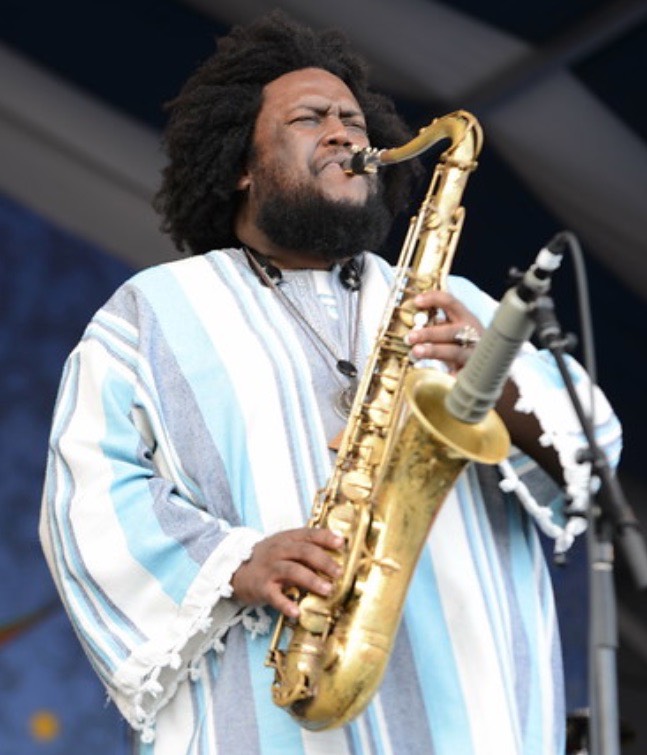
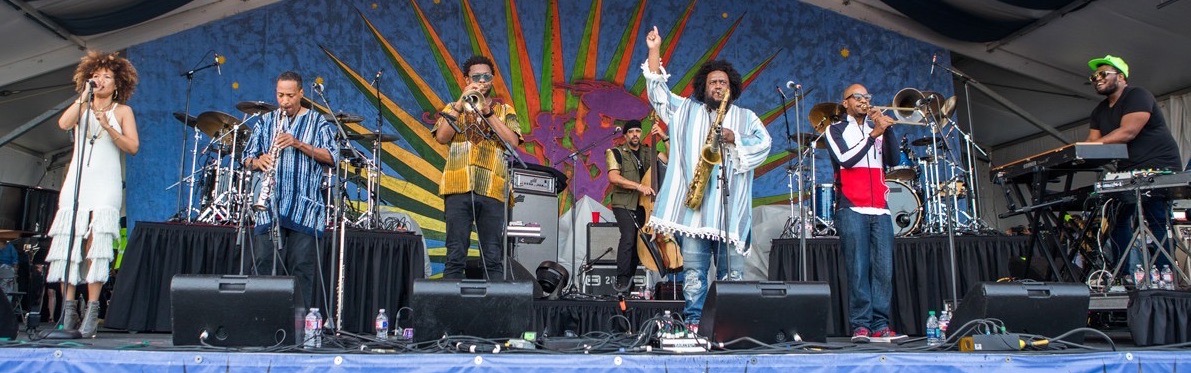
This is the first time I can recall a true jazz performer playing at one of the major stages at Jazz Fest. Playing in the slot before Gary Clark Jr., Kamasi Washington definitely had the crowd's attention. He is a physical force on tenor sax, evoking the days of John Coltrane and Sonny Rollins. And he leads a band with a similar mix of power and spirituality. Washington's solos cycled waves of sax into split-tone squalls, and he spread the love with all of his bandmates: bassist Miles Mosley, trombonist Ryan Porter, trumpeter Maurice Brown, synth wizard Brandon Coleman, soprano saxophonist (and Kamasi's father) Rickey Washington, and vocalist Patrice Quinn.
Known to many because of his work on Kendrick Lamar's "To Pimp a Butterfly," the Los Angeles-based Washington, beyond the saxophone, is a composer and bandleader. Like Gary Clark Jr., Washington was branded "the future," of, in his case, the new jazz on the arrival of his three-disc The Epic in 2015. While the term has been bandied about since the 1950s, what it refers to in his case is Washington's diversity given his wide experience playing with artists of many disciplines. His sound draws few boundaries between modal and soul-jazz, funk, hip-hop, and electronic music.
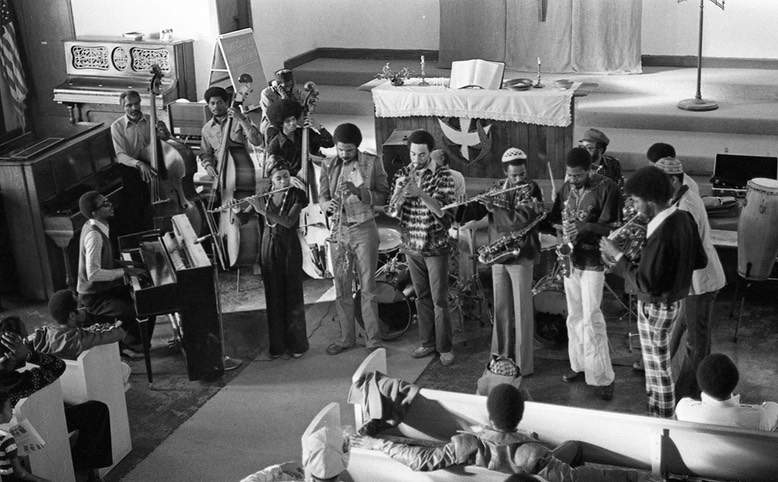
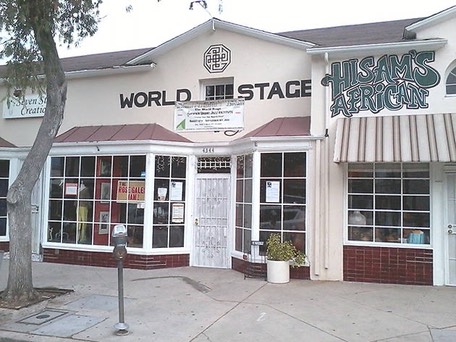
Born in Los Angeles, he was taken by his jazz musician father Rickey to see acts in the many clubs dotted around the area's backstreets: artists such as saxophonist Pharoah Sanders at the 100-capacity World Stage and pianist Horace Tapscott, who would perform with his Pan-Afrikan Peoples Arkestra. Tapscott's work was particularly influential for Washington. He viewed the music he played not as spiritual jazz, nor even jazz, but simply "black music," and pioneered the use of spoken-word artists who would chant sociopolitically charged lyrics over his compositions.
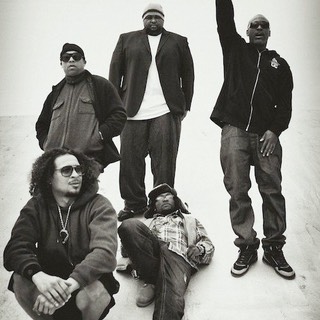
Across the street from Tapscott and the World Stage, another type of spoken-word culture was forming: hip-hop. Acts such as the Pharcyde and Freestyle Fellowship would hold jams at Project Blowed, extending Tapscott's lineage of black music and putting words to their heavily racialised social environment. A fluid scene was forming; in Leimert Park, the jazz kids would meet the hip-hop kids. Washington was both.
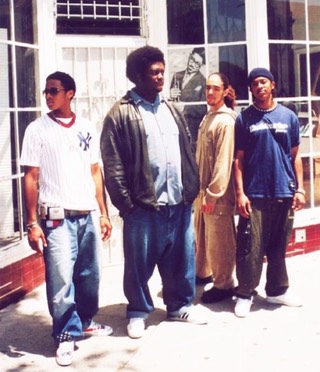
That's when he found his calling. Within a couple years, he was the lead tenor saxophonist at his high school in Los Angeles. After graduation, he attended UCLA to study ethnomusicology. While enrolled at UCLA, he recorded a self-titled album with Young Jazz Giants, a quartet he had formed with Cameron Graves and brothers Ronald Bruner, Jr. and Stephen "Thundercat" Bruner, released in 2004.
From that point on, Washington continually performed and recorded with an impressive variety of major artists across several genres, including Snoop Dogg, Raphael Saadiq, Gerald Wilson, McCoy Tyner, George Duke, and PJ Morton. He self-released a handful of his own albums from 2005 to 2008 while also performing and recording as one-third of Throttle Elevator Music. In 2014 alone, Washington demonstrated his tremendous range with appearances on Broken Bells' After the Disco, Harvey Mason's Chameleon, Stanley Clarke's Up, and Flying Lotus' You're Dead!, among other albums that covered indie rock, contemporary and progressive jazz, and experimental electronic music.
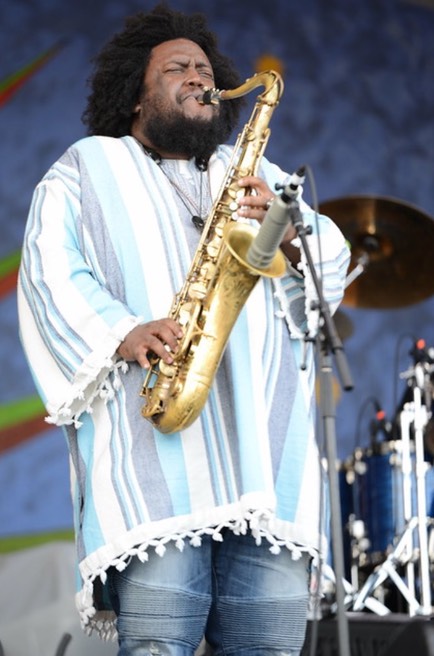

The following year, Washington contributed to Kendrick Lamar's To Pimp a Butterfly and released The Epic. An expansive triple album nearly three hours in duration, it involved the other three-fourths of Young Jazz Giants -- by then part of his larger collective, alternately known as the Next Step and West Coast Get Down -- and a string orchestra and choir conducted by Miguel Atwood-Ferguson. A critical and commercial success, The Epic landed at number three on Billboard's jazz chart.
Washington toured the United States, played dates in Europe and Japan, and continued session work with contributions to albums by Terrace Martin (see Day 9 last year), Carlos Niño, John Legend, Run the Jewels, and Thundercat, all while continuing to tour. In early 2017, he premiered Harmony of Difference, an original six-movement suite that explored the philosophical possibilities of counterpoint.
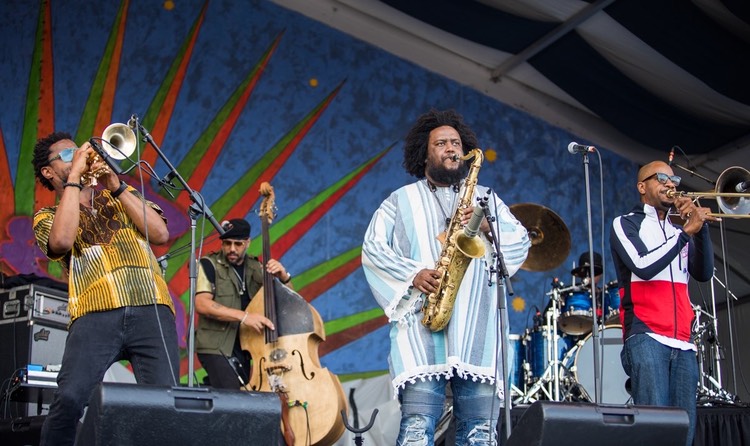
He returned in 2018 with Heaven and Earth. The double album featured contributions from Thundercat, Patrice Quinn, and Miles Mosley, and according to Washington, "represents the world as I see it outwardly, the world that I am a part of" and "the world as I see it inwardly, the world that is a part of me."
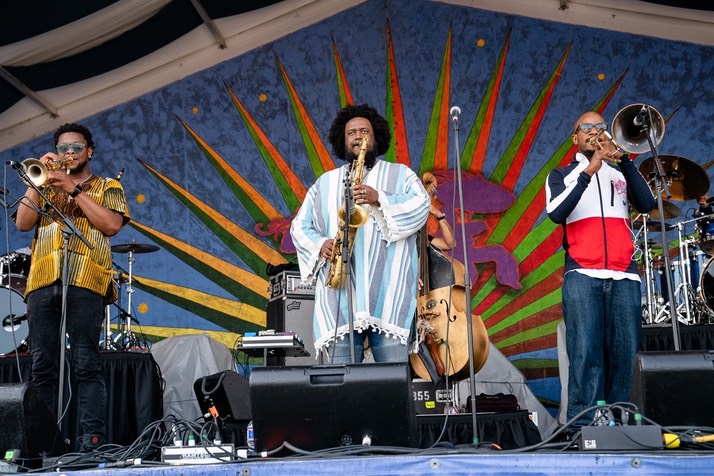
Both spheres feature musical representations of struggle, love and redemption, expressed through lush orchestration and a malleable mix of styles, ranging from futuristic post-bop to fusion and folk.
While not finding the huge Gentilly stage to be a good venue for jazz, still I was impressed with Washington's music. It is moody at times, soaring at others, and Washington gives the other players ample time to shine, in the true jazz spirit.
Audio/Video: Here is my video, taken from the fringes of the Gentilly crowd, mostly from the video board, and here is one of the actual stage. Here are four from the Fremont Theater in San Luis Obispo, California, late last year: "Fists of Fury," "Journey," "Magnificent 7," and "Truth." Icing on the cake: a full two hours of "The Epic" at its premiere in 2015.
Now I headed back across the Fair Grounds for more thoroughly modern jazz.
Cécile McLorin Salvant
Jeff, in the Jazz Tent
Seen Before: First time!
Sometimes you encounter an artist that just leaves you feeling happy, and that's what happened today with Cécile McLorin Salvant. I knew I would not be staying for the entire performance, but I was very glad I caught as much as I did.
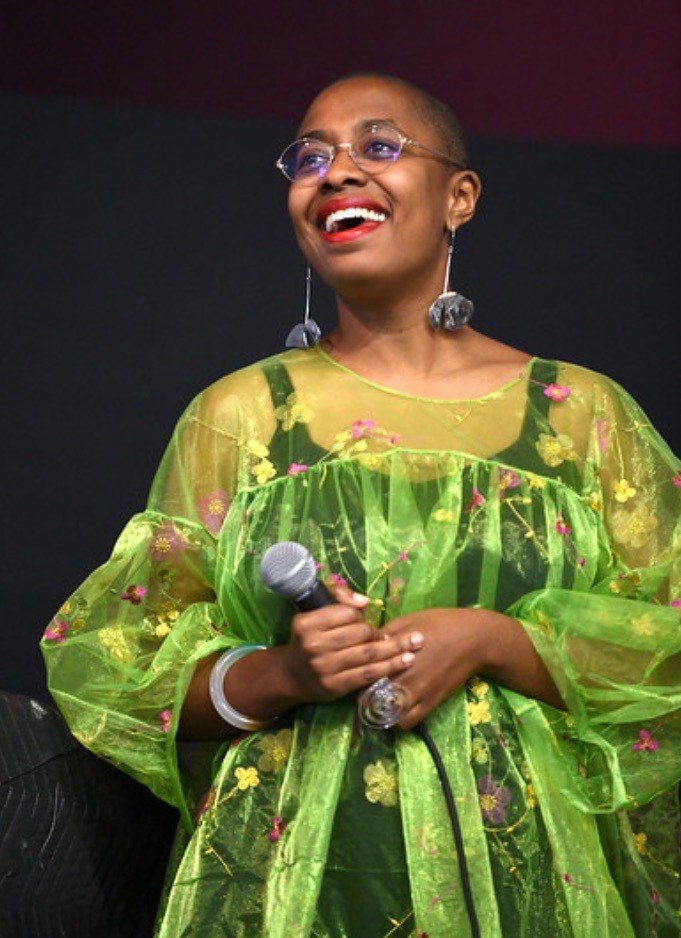
She was born and raised in Miami of a French mother and a Haitian father, started classical piano studies at 5, and began singing in a children's choir at 8 years old. Early on, she developed an interest in classical voice.
When she was 18, she moved to Aix-en-Provence, France, to study law as well as classical and baroque voice at the Darius Milhaud Conservatory. Her mother, who came along to help her get settled, saw a listing for a class in jazz singing and suggested that Cécile sign up.
"I said, 'O.K., whatever,'" she recalls. "I was super passive." At an audition for the class, she sang "Misty," which she knew from a Sarah Vaughan album that her mother often played. After she finished, the teacher, who'd been accompanying on piano, asked her to improvise. She didn't know what that meant, nor did she care. "I didn't want to get into his class anyway," she recalled. "I had poli-sci, law, classical voice -- I didn’t have time."
But the teacher, a jazz musician named Jean-François Bonnel, was astonished by her singing. "Cécile was something else," he said. "She already had everything -- the right time, the sense of rhythm, the right intonation, an incredible Sarah Vaughan type of voice -- a pure bel canto, with exceptional range and precision." Two days later, Bonnel ran into her on the street and told her that he'd come ring her doorbell until she signed up for his class. "I always obeyed my parents and my teachers," Salvant recalled, with a laugh. She enrolled, and found that she liked it. "There were all these cool people with dreads and cigarettes," she said. "It was very different from the classical-music program, with these precious girls, or the poli-sci school, which was full of rich kids from Saint-Tropez, very arrogant, politically on the right. I had nothing to say to those people. So I figured the jazz department would be like a good hobby -- a place to make friends, like going to a community-theatre class."
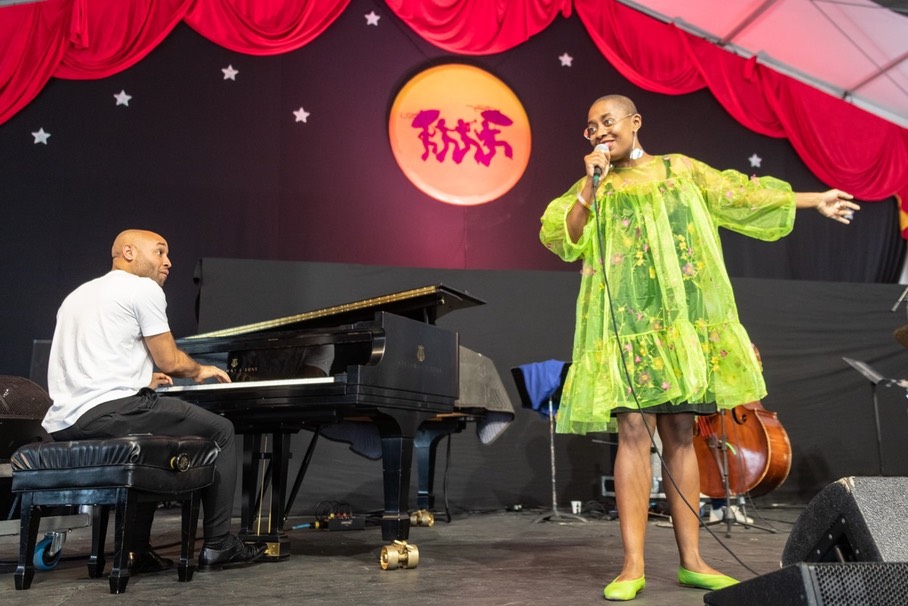
Two years later, after a series of concerts in Paris, she recorded her first album Cécile, with Bonnel's Paris Quintet. A year later, in 2010, she won the Thelonious Monk competition. Since then she has been nominated for Grammy awards three times and won twice.
Cécile frequently makes music with Aaron Diehl, Paul Sikivie, Lawrence Leathers, Kyle Poole, and Sullivan Fortner. She has collaborated with Archie Shepp, Wynton Marsalis, John Clayton, Jeff Hamilton, Renee Rosnes, Bill Charlap, Fred Hersch, and Jacky Terrasson. Described as a "postmodern cabaret singer," she sings vaudeville, country blues, broadway songs, rarities, and her own compositions.
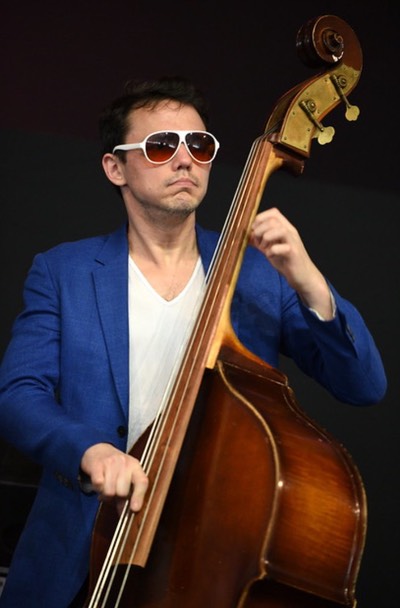
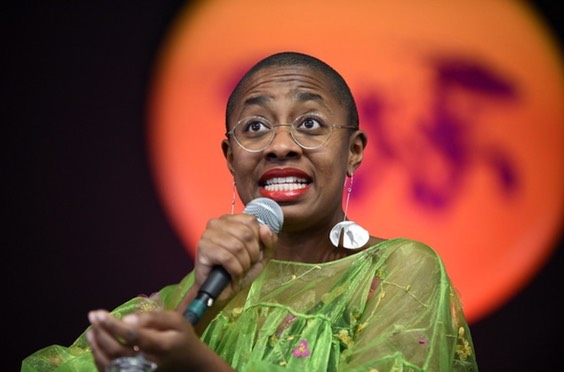
Marsalis, who has twice hired Salvant to tour with his Jazz at Lincoln Center Orchestra, says, "You get a singer like this once in a generation or two." Salvant might not have reached this peak just yet, he said. But, he added, "Could Michael Jordan do all he would do in his third year? No, but you could tell what he was going to do. Cécile's the same way."
Audio/Video: Here is my video from the Jazz Tent today, and here is 45 minutes from Dizzy's Club Coca Cola at the Lincoln Center in New York a couple of years ago.
I had to tear myself away from this wildly creative music to head over to an annual appointment.
Nathan and the Zydeco Cha Chas
Jeff and Laurie, at the Fais Do Do stage
Seen Before: Day 11 in 2013, Day 2 in 2014, Day 3 in 2015, Day 9 in 2017, and Day 10 last year.
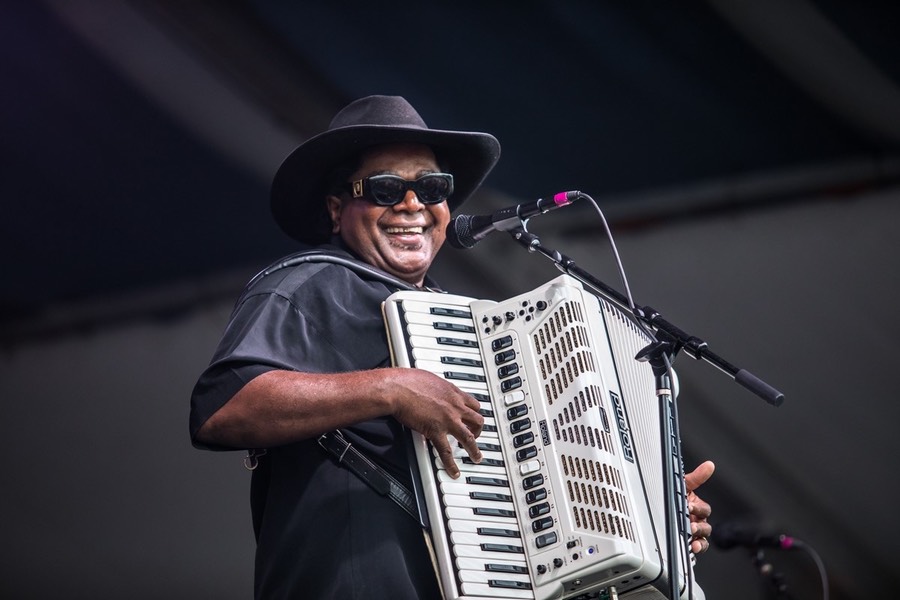
I always find a way to get down to the front of the Fais Do Do stage for the show by Nathan Williams and the Zydeco Cha Chas, and that made it easier for Laurie to find me when she came over from the Gentilly stage. Zydeco is a great way to end any day at Jazz Fest, and Nathan's interaction with the people makes it even better.
The front of the Fais Do Do stage, while it forces you to look 'way up to the performers, does allow you the opportunity to see the performers up close and personal. This is especially true with Nathan, as he almost always joins the crowd with his accordion near the end of his show.

He did that today, joined by scrubboard player Clifford Alexander. As they headed back to the stage Nathan stopped to have a seat on the speaker stand directly in front of us, with Alexander standing behind him. That was very cool.
Other members of this awesome band you've no doubt read about in previous years. Dennis Paul Williams, Nathan's brother, on guitar, brings a bluesy sound to the zydeco songs that is one of a kind. Junius Antoine on the bass and Djuan Francis on the drums keep the beat going.
Audio/Video: Here is my video of this fantastic zydeco party, and here is a full hour from the Kennedy Center's Millenium Stage earlier this year.
Was that all right for ya?

It was easy to get onto shuttles today, but downtown on Canal Street was clogged like we've never seen it, and it took a long time to get from the I-10 exit they use down to the Sheraton. By the time we were ready to go out it was already pretty late, so we decided to walk the couple of blocks up Tchoupitoulas to our favorite retired surfers' bar, Lucy's. But we were too late for that because the tables in the dining room were all taken, and they were transitioning the bar into the Friday night DJ setup. So we decided to try the new place right across the street.
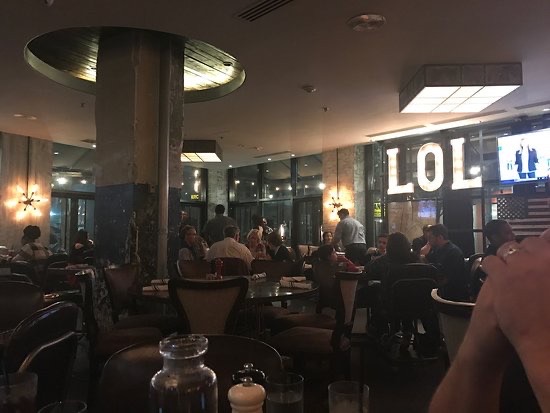
The Legacy Kitchen's Craft Tavern is affiliated with the Marriott Renaissance hotel. This part of the Warehouse Arts District is exploding with hotels, restaurants, galleries, and condos, all of them in renovated industrial facilities.

This place was no different. The decor is very rustic, casual, and warm, which gives it a great vibe. They left the concrete pillars from the original building, too, so it definitely has the warehouse feel as well. There are TV's, tables, and lounge areas throughout, adding to the relaxed atmosphere.
The service was just OK. Again, we realize we were there late, but if you are open, you need to be open, if you know what I mean. The food, however, when it arrived (before the appetizer we ordered and then cancelled) was pretty good. I had a fire-roasted Anaheim chile burger with a cilantro-lime spread. Laurie had a "tuna tango" salad with seared ahi, avocado, mango, macadamia nut, and wonton with a ginger-lime dressing.
That was it. It had been a long day. It's been in the air for some time, and finally there is big-time r@*n in the forecast for overnight into the morning, and we are on pins and needles.